China’s stone market offers granite, marble, limestone, quartzite, and engineered surfaces for many construction projects. However, “best” stone does not always mean the most expensive material. Quality depends on the project, application, finish, and expected service life.
For buyers, understanding what affects stone pricing in the market is essential before comparing supplier quotations. Quarry location can influence extraction costs, block size, and transport distance. Natural color, veining, thickness, and surface consistency also affect value. A rare marble with dramatic movement may cost more than a stable, widely available granite. Yet visual appeal alone is not enough. Water absorption, flexural strength, slab yield, and weather resistance deserve careful review.
Processing creates another major price difference. Cutting, polishing, edge profiling, CNC work, packaging, and inspection all add labor and equipment costs. Custom dimensions may produce more waste. Freight, fuel prices, exchange rates, port charges, and seasonal demand can change the final quotation. Small orders often carry higher unit costs.
Real sourcing experience shows that the lowest offer is not always the safest choice. A cheaper batch may contain inconsistent thickness or poorly matched slabs. We have seen attractive samples fail to represent full-container quality. That mistake is easy to make. Reliable buyers request recent photos, test reports, production details, and clear tolerances before ordering. Independent inspection can also protect long-term budgets. Still, no pricing guide is perfect. Quarry conditions and market pressures change quickly, so every estimate should be checked against current supplier evidence.
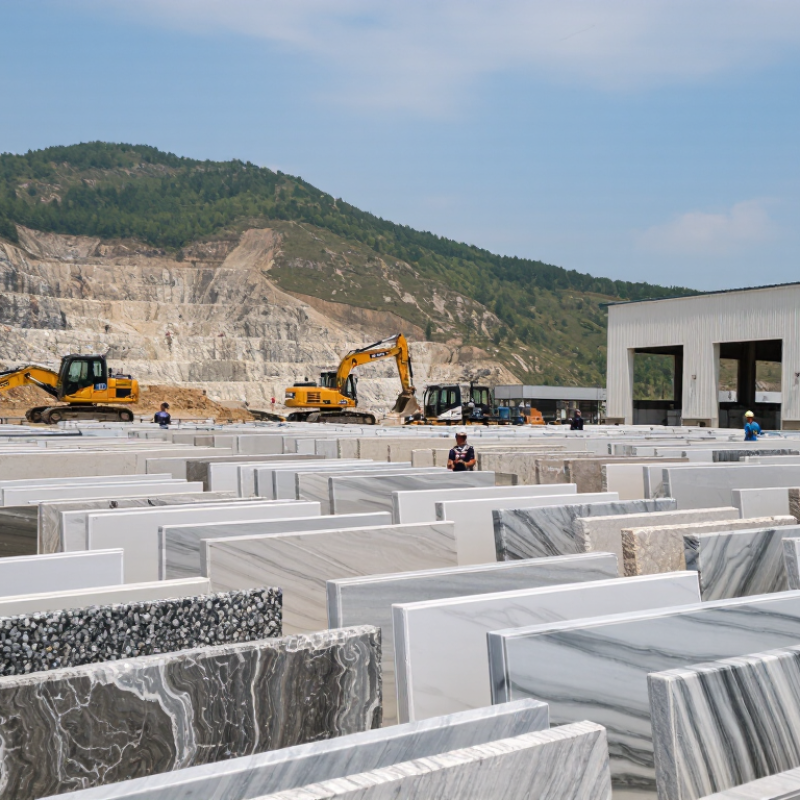
China Best Stone: What Affects Pricing in the Market?
Stone Types and Quality Grades in China’s Market
China’s stone market offers granite, marble, limestone, slate, and engineered surfaces. Each type has different extraction, processing, and performance costs. Granite usually suits kitchen counters, paving, and exterior walls because it handles wear well. Marble offers distinctive veining, but some varieties absorb moisture more easily. Limestone creates a softer appearance and often needs careful sealing.
Quality is not judged by appearance alone. Buyers should check water absorption, flexural strength, abrasion resistance, thickness, and frost resistance. Relevant GB/T testing methods can provide useful technical evidence. However, supplier grading terms such as first grade or premium grade may not mean the same thing everywhere. This is where confusion begins.
Ask for test reports from the current production batch. Inspect several slabs under natural light. Look for filled cracks, uneven polishing, resin marks, and hidden color changes. A container sample may look excellent, while later slabs show stronger veining. It happens. Quarry conditions can change within a short distance. The stone’s intended use also affects its value. A visually perfect slab may still perform poorly outdoors if its absorption is high. Conversely, minor color variation may be acceptable for a hotel floor. Price should therefore reflect both material quality and application risk, not only surface beauty.
China Best Stone: What Affects Pricing in the Market?
Chinese stone prices depend on more than color or origin. Block yield is critical. A cracked block may produce only 45% usable slabs. A stable block can exceed 70%. Quarry depth, extraction risk, and seasonal water conditions also change costs. The United States Geological Survey’s 2023 Minerals Yearbook identifies production volume, processing capacity, and construction demand as major dimension-stone market indicators.
Processing creates another price gap. A polished slab requires sawing, resin filling, grinding, calibration, and quality inspection. Thicker slabs consume more raw material and energy. Complex edges need skilled labor. The International Trade Centre’s Trade Map, using HS 6802 data, shows that stone trade values must be read with weight and product type together. A higher export value does not always mean better quality.
Logistics remain practical pressure points. Container availability, port charges, inland trucking, and currency movements can alter a quotation within weeks. China Customs trade statistics also separate crude stone from worked stone, which makes simple online price comparisons unreliable. A low quote may hide inconsistent thickness or weak packing. That matters.
Real projects often reveal the difference. Two beige slabs may look similar under showroom lights, yet vary in absorption, veining, and repair marks. ASTM C97 testing and supplier inspection reports provide stronger evidence than photographs. Still, laboratory data cannot predict every quarry variation. That uncertainty deserves a visible allowance in the final budget.
Indicative wholesale price midpoints by common stone category in China
Natural marble generally commands higher prices because of quarry scarcity, block quality, color consistency, and pattern uniqueness. Granite and limestone are often more stable in price, while slate tends to be more economical. Final quotations are also affected by thickness, slab size, surface finishing, processing complexity, order volume, packaging, and transportation distance. Prices shown are indicative market benchmarks in USD per square meter and may vary by grade, origin, and project requirements.
Stone pricing in China begins at the quarry face, not the showroom. Grand View Research’s 2024 Natural Stone Market report estimated the global market at about US$51.3 billion in 2023. That scale hides large differences between quarry grades, regions, and finishes.
Block yield matters most. A mountain may contain attractive color, but fractures can sharply reduce saleable blocks. Diamond-wire cutting, bench preparation, water control, and extraction equipment add labor costs. Larger blocks usually reduce cutting loss. However, they require stronger lifting and transport systems. Quarry distance also changes the final quote. Fuel and inland freight can outweigh a modest stone discount. The USGS Mineral Commodity Summaries 2024 separates dimension stone from crushed stone. This prevents unreliable price comparisons.
At the factory, slabs pass through sawing, calibration, resin filling, polishing, and inspection. Thickness, slab size, and order volume affect electricity, abrasives, labor, and breakage. A polished surface needs more stages than a honed one. Flamed or brushed finishes require different equipment and additional handling time. Natural variation creates another cost. Matching veining may require selecting several slabs from one block. Industry estimates differ, and they should. Broad market reports cannot replace a project-specific quotation. A low price may hide weaker yield assumptions, uneven finishing, or excessive packaging. Buyers should request yield data, thickness tolerances, finish samples, moisture conditions, and crate details. Small omissions become expensive corrections.
| Cost Stage | Key Pricing Dimension | Typical Market Condition | Indicative Cost Range (USD/m²) |
Typical Share of Finished Cost | Price Impact | How It Affects the Final Price |
|---|---|---|---|---|---|---|
| Quarrying | Stone type and geological rarity | Common granite, limestone, and marble generally have broader supply; rare colors, consistent veining, and limited deposits command a premium. | $8–$45 | 15%–35% | High | Material scarcity and quarry yield directly influence the block price before processing begins. |
| Quarrying | Block recovery rate | Large, sound blocks with fewer cracks and fewer natural defects provide more usable slabs than heavily fractured deposits. | $3–$18 | 5%–15% | High | Low recovery increases the amount of rough stone required for each sellable square meter. |
| Quarrying | Quarry depth and extraction difficulty | Greater depth, unstable rock faces, difficult access, and additional safety requirements increase extraction expenses. | $4–$20 | 5%–18% | Medium–High | More drilling, wire sawing, bench preparation, and material handling raise the cost of rough blocks. |
| Quarrying | Quarry location and internal transport | Quarries located far from highways, ports, or processing centers typically require additional truck movement and handling. | $2–$15 | 3%–12% | Medium | Distance and difficult terrain increase fuel, loading, unloading, and temporary storage costs. |
| Processing | Slab thickness | Common architectural thicknesses include approximately 18–20 mm and 30 mm; thicker slabs use more raw material and require longer cutting time. | $6–$28 | 8%–25% | High | Thickness affects both the quantity of stone consumed and the energy required for sawing and calibration. |
| Processing | Gang-sawing or block cutting | Block cutting converts rough blocks into slabs using diamond tools, water, electricity, labor, and planned production time. | $5–$22 | 7%–20% | Medium–High | Cutting speed, blade wear, slab size, and block utilization determine the processing cost per square meter. |
| Processing | Resin filling and reinforcement | Cracks, pits, and open veins may be filled with resin; fiberglass backing may be added where structural support is needed. | $2–$12 | 3%–12% | Medium | Extra resin, drying time, labor, and inspection are required for stones with more natural imperfections. |
| Processing | Calibration and dimensional tolerance | Calibrated slabs and tiles require controlled thickness, accurate sizing, edge trimming, and additional quality checks. | $2–$10 | 2%–8% | Medium | Tighter tolerances improve installation efficiency but increase machine time, inspection, and reject risk. |
| Finishing | Polished surface | Polishing creates a reflective surface through progressive abrasive treatment and is widely used for interior applications. | $3–$14 | 4%–12% | Medium | Surface hardness, number of abrasive stages, gloss requirements, and rework rates affect the finishing price. |
| Finishing | Honed, brushed, or leathered surface | Matte and textured finishes require different abrasive sequences, brushing tools, water usage, and quality controls. | $4–$18 | 5%–15% | Medium | Textured finishes can require slower production speeds and additional passes compared with standard polishing. |
| Finishing | Waterjet, CNC, and edge fabrication | Cut-to-size work, sink cut-outs, miters, bullnose edges, drain grooves, and custom profiles require specialized equipment. | $10–$85 | 10%–40% | High | Complex shapes and small production runs increase programming, tooling, setup, labor, and material waste. |
| Finishing | Surface protection and sealing | Impregnating sealers, anti-stain treatments, and protective packaging may be specified for porous or high-use stone. | $1–$8 | 1%–6% | Low–Medium | Protection adds a relatively small direct cost but can require additional drying, testing, and handling time. |
| Processing | Quality grade and visual selection | Premium selections usually require consistent color, controlled veining, fewer repairs, and stricter slab inspection. | $5–$40 | 5%–30% | High | Visual sorting reduces the usable percentage of production and increases the cost of accepted slabs. |
| Processing | Packaging, loading, and export preparation | Wooden crates, edge protection, moisture control, container loading, and documentation are commonly required for international shipments. | $3–$16 | 3%–10% | Medium | Fragile products and low-volume orders require more protective packaging and handling per square meter. |
China Best Stone What Affects Pricing in the Market?
The Role of Supply Chains, Demand, and Regional Availability
Stone pricing in China is shaped by movement, not only by quarry quality. Blocks may travel from an inland quarry to a cutting plant, then to a coastal port. Each transfer adds loading, storage, fuel, and handling costs. Container shortages can also change a quotation within weeks. In procurement reviews, I compare ex-quarry, processed, and delivered prices separately. That simple split often reveals hidden logistics charges.
Demand creates a second pressure. Construction activity, hotel renovations, and public projects can raise orders for particular colors or finishes. When several buyers request the same grade, factories may prioritize larger contracts. Smaller orders then face longer lead times or higher cutting costs. Yet demand is not always steady. Weather, currency changes, and delayed projects can quickly weaken it. A cheap offer may reflect slow production, not real efficiency. I have seen estimates look convincing until delivery dates moved.
Regional availability matters just as much. Some stones are close to processing centers, while others require long inland transport. Local access affects breakage risk, inspection costs, and replacement speed. Buyers should request recent quarry data, batch photos, and test reports covering water absorption and flexural strength. Samples help, but they cannot show every block variation. That limitation deserves honest discussion. Pricing becomes more reliable when suppliers explain grade differences, stock levels, and transport assumptions in writing. Even then, the market can surprise everyone.
Comparing China stone prices starts with an identical specification, not a quick search for the lowest number. Ask for the same stone type, thickness, surface finish, slab size, and edge treatment. Even a two-millimeter difference can change material yield, installation, and breakage risk. Check the technical sheet.
A reliable comparison should include water absorption, flexural strength, color range, and acceptable natural variation. Request current photos, a physical sample, and clear measurements before approving production. Digital images can hide small pits, resin marks, or uneven polishing. Details matter.
Freight changes everything. Compare the stone price, packing method, port charges, insurance, duties, and inland delivery as one landed cost.
Confirm the minimum order, production schedule, inspection process, and quotation validity in writing. An unusually low offer may exclude strong crates or careful sorting. That is not always value.
In practice, I have seen buyers focus on unit price and overlook replacement costs after damaged slabs arrive. A better supplier explains limitations instead of promising perfect uniformity. I still review every comparison twice, because a polished spreadsheet can miss a practical risk.
Pricing begins at the quarry face, not the showroom. Block yield, fractures, cutting equipment, labor, and water control affect the base cost. Attractive color means little if fractures reduce saleable blocks.
Larger blocks can reduce cutting loss and improve slab yield. They also require stronger lifting equipment and transport systems. Bigger is not always cheaper.
Stone may travel from an inland quarry to a cutting plant and then to a coastal port. Loading, storage, fuel, and inland freight add cost at every transfer. A cheaper quarry can still produce a higher delivered price.
Sawing, calibration, resin filling, polishing, and inspection all add labor and energy costs. Polished surfaces need more stages than honed surfaces. Flamed and brushed finishes require different equipment and extra handling.
Matching veins may require several slabs from one block. Color changes, pits, resin marks, and uneven polishing can increase sorting and replacement costs. Samples help, but they cannot represent every block.
Request thickness tolerances, finish samples, current photos, batch details, and technical test reports. Check water absorption and flexural strength. Also confirm moisture conditions and crate construction.
Compare identical stone types, thicknesses, slab sizes, finishes, and edge treatments. Include packing, port charges, insurance, duties, and inland delivery. The landed cost matters more than the unit price.
It may assume higher block yield, weaker packaging, slower production, or limited sorting. Damaged slabs can create expensive delays and replacements. I sometimes trust a neat spreadsheet too quickly, and that is a mistake.
Construction projects and renovation activity can increase demand for specific colors or finishes. Factories may prioritize larger orders, leaving smaller orders with longer schedules. Weather, currency changes, and delayed projects can also shift prices suddenly.
China’s stone market offers a wide range of natural and engineered materials, with prices varying according to stone type, color, pattern, durability, consistency, and quality grade. Understanding what affects stone pricing in the market requires looking beyond appearance. Rarity, block size, quarry location, extraction difficulty, and the amount of usable material all influence the initial cost. Higher grades usually provide better uniformity, fewer defects, and stronger performance, making them suitable for demanding architectural and interior applications.
Processing and finishing also play an important role, as cutting, polishing, edge treatment, calibration, packaging, and quality inspection add value and expense. Supply chain conditions, transportation distance, regional availability, seasonal demand, and project volume can further affect quotations. To select the best value, buyers should compare equivalent specifications, including thickness, finish, grade, waste rate, delivery terms, and after-sales support. A careful comparison of total cost and long-term performance is more reliable than choosing solely by the lowest price.

Zenlith Stone