When considering countertops, many homeowners face the question, "why is quartz more expensive than granite?" According to industry expert Dr. Lisa Mitchell, a materials scientist specializing in countertop production, "The intricate manufacturing process of quartz contributes significantly to its higher price." This statement reflects the complex nature of quartz, which often involves advanced technology and a combination of natural and synthetic materials, ensuring both durability and aesthetic appeal.
Granite, while beautiful and robust, is a natural stone that is mined and cut into slabs. Its pricing hinges mostly on supply and demand dynamics. In contrast, quartz countertops are engineered, which adds costs due to labor and machinery requirements. The consistency in color and pattern of quartz makes it desirable, but this uniformity comes at a higher financial investment.
Some homeowners may wonder if the price difference is justified. With quartz, you gain unique advantages such as greater resistance to stains and scratches. However, granite offers individuality in its natural variations. Weighing these factors can be challenging, as personal preference and budget play a significant role in choosing a countertop that best fits each individual's needs.
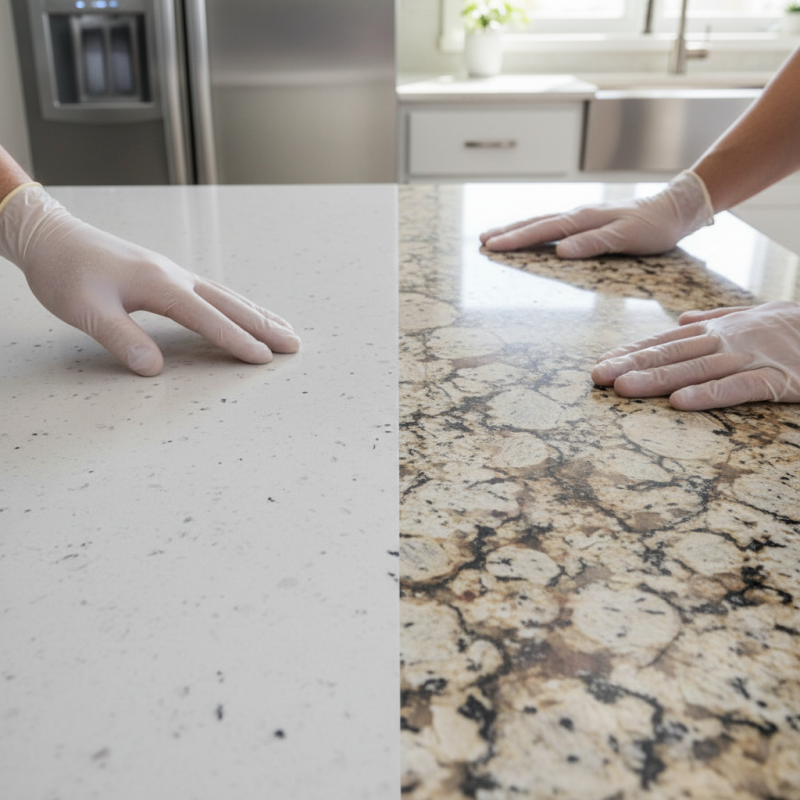
When comparing quartz and granite, price plays a significant role in decision-making. Quartz surfaces typically range from $50 to $150 per square foot, while granite varies between $40 and $100. This price difference arises from various factors. Quartz, engineered from crushed stone, undergoes a meticulous manufacturing process. This controlled production ensures uniformity, which adds to its cost. In contrast, granite is a natural stone, directly sourced from quarries. The extraction process is labor-intensive, but the raw material often becomes more affordable.
The durability and maintenance requirements also contribute to the overall expenses. Quartz is non-porous, making it less prone to staining and more resistant to bacteria. This attribute can lead to long-term savings on cleaning and upkeep. Granite, while durable, requires periodic sealing to maintain its appearance. According to the National Kitchen and Bath Association, nearly 80% of homeowners cite maintenance ease as a critical factor in their surface choice.
Furthermore, design versatility impacts pricing. Quartz offers an array of colors and patterns due to its synthetic nature. This adaptability allows homeowners to create customized looks, often fetching a higher price. Conversely, granite’s variations are limited to natural patterns, which can be beautiful yet reduce options for some consumers. These factors illustrate the complexity behind the cost of quartz compared to granite, moving beyond mere aesthetics to include functionality and longevity.
When considering countertops, many choose between quartz and granite. Both materials offer their own strengths, but quartz tends to be pricier. This price difference often stems from the quality and durability each material delivers. Quartz is engineered with about 90% crushed natural stone mixed with resin. This process results in a non-porous surface that resists staining and bacteria. According to industry reports, quartz countertops have a compression strength of over 15,000 psi, making them quite durable for daily use.
Granite, on the other hand, is a natural stone. While it boasts aesthetic appeal, its porous nature makes it more susceptible to stains and bacterial growth. Granite typically requires regular sealing to maintain its quality and appearance. A study by the Marble Institute revealed that granite has a lower resilience to impact compared to quartz, leading to higher repair costs for chipped surfaces. Many homeowners may overlook these maintenance requirements, focusing instead on initial purchase prices.
Both materials have their pros and cons. Some people might prefer granite for its natural beauty. Others may appreciate quartz for low maintenance and durability. Each material can still sustain a well-designed space. However, potential buyers should consider long-term usage and costs rather than immediate aesthetics alone. It’s essential to reflect on the trade-offs inherent in these choices.
When it comes to home design, aesthetic appeal can significantly influence material costs. Quartz surfaces often boast intricate patterns and vibrant colors that can enhance the overall look of a space. These designs require sophisticated manufacturing processes. This complexity directly contributes to higher prices. A skilled artisan's touch adds value. The result is a unique visual effect that granite, with its more uniform appearance, may not match.
Granite is a natural stone, more abundant and easier to obtain. Its simpler extraction process makes it less expensive. However, choosing quartz comes with a guarantee of consistency and durability. This leads buyers to weigh their preferences against costs. Some may find themselves drawn to the allure of quartz but unsure if the investment is worth it. Thoughtful consideration of design versus budget is crucial. Opting for quartz can turn a kitchen into a stunning centerpiece or a bathroom into a luxurious retreat.
Ultimately, the decision lies in personal taste and lifestyle. Each material has its strengths and weaknesses. It's essential to reflect on what speaks to you and how each choice affects your space and budget. As you navigate these options, remember that beauty often comes with a price tag. Balancing aesthetics and expense is a journey worth taking.
| Material | Average Cost per Sq. Ft. | Design Options | Durability Rating | Maintenance Requirements |
|---|---|---|---|---|
| Quartz | $60 - $100 | High variety in colors and patterns | 8/10 | Low |
| Granite | $40 - $75 | Limited natural colors and patterns | 9/10 | Moderate |
When it comes to installation costs, granite often comes out ahead. Granite requires less labor-intensive processes during installation. The stone is naturally sturdy, allowing for easier handling. Many homeowners find that granite countertops can be installed quickly and efficiently, minimizing labor costs.
In contrast, quartz installations can be tricky. Although quartz is durable, handling synthetic materials can require special tools and skills. Additionally, the seams in quartz countertops can be more pronounced, leading to extra work during installation. This added complexity might raise overall costs.
Maintenance costs also differ significantly. Granite surfaces often need regular sealing. Without sealing, the stone may absorb stains over time. On the other hand, quartz is non-porous, making it easier to clean. It's less prone to staining and doesn't require sealing. Still, some homeowners may overlook the importance of maintaining both types properly. This can lead to long-term issues that could have been avoided.
The rising price of quartz compared to granite can be traced to multiple market trends and consumer demand. Quartz is engineered stone, blending natural materials with resins, which requires more labor and resources in production. This complexity can raise costs significantly. Additionally, the demand for high-quality quartz surfaces has surged in recent years. Customers often prefer quartz for its visual appeal and low maintenance, leading to higher prices.
Granite, while popular, is more abundant and often extracted from quarries at a lower production expense. This availability keeps prices relatively stable. Consumers, however, show a growing preference for unique designs. Companies are responding to this trend by offering more quartz options, further driving up prices and positioning quartz as a premium choice. In a market driven by aesthetic and functional needs, the perceived value of quartz continues to soar.
Prices can fluctuate based on geographic demand and local availability. This unpredictability in the market can sometimes leave consumers questioning the fairness of quartz pricing. Buyers may reflect on whether the price differential aligns with their specific needs, highlighting the ongoing challenge in determining value in the stone marketplace.
: Quartz typically costs between $50 and $150 per square foot, while granite ranges from $40 to $100.
Quartz involves a complex manufacturing process, ensuring uniformity, which adds to its overall cost.
Quartz is non-porous and easier to maintain, often leading to lower long-term cleaning costs compared to granite.
Quartz offers intricate designs and vibrant colors; granite provides natural patterns but less variation.
Increased consumer demand for low maintenance and high-quality designs drives up quartz prices significantly.
Yes, pricing can vary based on local demand and availability, leading to fluctuations in both quartz and granite costs.
Personal taste, design preferences, durability, and cost are essential factors in making an informed decision.
While quartz is visually appealing, some may question if the higher price aligns with their specific needs and budget.
Quartz is more durable and does not require sealing, while granite needs periodic maintenance to maintain its appearance.
Design versatility can influence costs; quartz offers more customization options, while granite has limited natural variations.
The article "Why is Quartz Pricier Than Granite for Your Purchase?" explores the various factors contributing to the price differences between quartz and granite. Key comparisons are made regarding price determinants, with quartz often seen as the higher-end option due to its manufacturing process and material qualities. Quality and durability are examined, highlighting that quartz tends to offer more consistency and less porosity, which can result in lower maintenance costs over time.
Additionally, aesthetic appeal plays a significant role in determining costs; quartz can be produced in a wider variety of designs and colors, making it more desirable for modern applications. The installation and maintenance expenses also differ, as quartz is generally easier to install and maintain compared to granite. Finally, market trends and demand contribute to the pricing dynamic, leading to the conclusion that these various factors answer the question of why is quartz more expensive than granite.

Zenlith Stone