Can quartz be used outdoors in 2026? Sometimes—but the answer depends on the exact product, its resin, and its exposure. Engineered quartz combines natural mineral particles with binders and pigments, so it does not behave exactly like solid granite. Prolonged sunlight can fade some colors or alter resin, while heat, rain, and freeze-thaw cycles add further stress. A pale sample may look unchanged indoors, then appear different after months beside a sunny patio door. Small details matter.
The U.S. Geological Survey’s Mineral Commodity Summaries describe quartz’s broad industrial uses, but mineral data cannot establish whether a finished countertop is suitable for outdoor installation. For exposure planning, NREL’s National Solar Radiation Database offers location-based solar information; it helps explain why a shaded northern terrace and a full-sun pool deck are not equivalent test conditions. The Natural Stone Institute’s technical guidance also underscores the value of selecting materials for their application and maintenance needs. Still, no general report replaces the specific slab’s technical sheet. Check its stated UV resistance, temperature limits, warranty terms, and installation requirements with the manufacturer before buying. Ask about local climate, too.
Some products are made for outdoor use. Many standard quartz slabs are not. That distinction is easy to miss in a showroom, and even a careful checklist cannot predict every site condition. This guide looks at what the available evidence supports, where the uncertainties remain, and when another surface may be the safer choice.
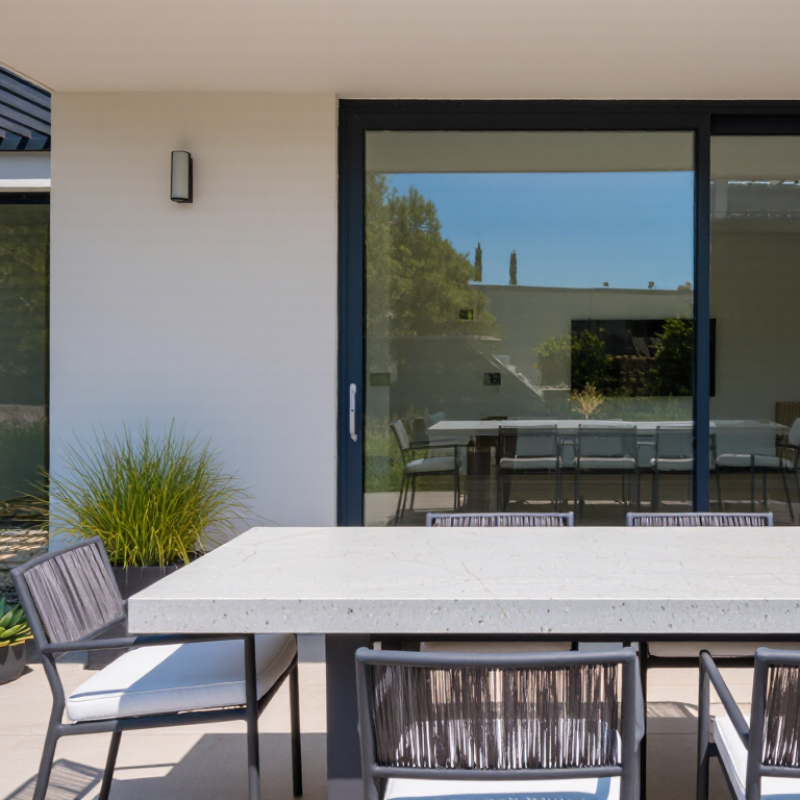
Quartz’s outdoor performance depends on what “quartz” means. Natural quartz is a mineral; engineered quartz is a composite, commonly made with mineral particles and polymer binders. That binder matters. Sunlight can fade pigments or alter resin over time, so a surface that looks unchanged indoors may weather differently on a patio. Heat can also build beneath dark slabs, especially near grills or in full afternoon sun. Check the product’s outdoor-use rating before installation.
A useful way to assess weathering is ASTM G154, the standard practice for fluorescent UV-lamp exposure of nonmetallic materials. Its test cycles can include eight hours of UV exposure at 60°C followed by four hours of condensation at 50°C. These are laboratory conditions, not a promise of a set outdoor lifespan. Ask for test results on the actual surface, including color change and strength after exposure. Small details matter: a pale sample may hide fading that shows clearly on a dark one. And laboratory tests cannot fully reproduce shade, rain, frost, or local heat. I’d want the written test method and results, not just the word “durable.”
| Performance factor | Typical engineered quartz response outdoors | Practical implication | Assessment |
|---|---|---|---|
| Direct sunlight and UV exposure | Many engineered quartz surfaces contain polymer resin, which can discolor, yellow, or change appearance after prolonged UV exposure. | Color changes may be uneven, especially where part of a surface is shaded. Confirm that the specific product is explicitly rated for outdoor use. | Main concern |
| Rain and moisture | The surface is generally low in porosity, but seams, edges, cut-outs, and the supporting structure can still allow water-related problems. | Use suitable outdoor detailing and drainage; do not assume that a low-porosity surface makes the complete installation waterproof. | Generally good |
| Freeze–thaw cycles | Performance depends on the product, fabrication, installation, and water exposure. Trapped water and vulnerable seams can increase the risk of damage in freezing conditions. | For climates with repeated freezing, choose a surface and installation system specifically approved for those conditions. | Product-dependent |
| Heat and hot cookware | Quartz is heat-resistant in normal use, but sudden or intense heat can damage resin or cause thermal shock. | Use a trivet for hot cookware and avoid placing grills, fire features, or other concentrated heat sources directly on the surface. | Use precautions |
| Stains and routine cleaning | The relatively nonporous surface is often easy to clean, although outdoor dirt, food, and standing residues can still leave marks. | Clean spills promptly with mild soap and water, and follow the care instructions for the specific surface. | Generally good |
| Outdoor warranty and suitability | Many products intended for indoor use are not warranted for prolonged outdoor exposure; terms vary by product and manufacturer. | Check written outdoor-use approval, UV limitations, climate restrictions, and warranty coverage before purchase and installation. | Verify first |
| Bottom line: Standard engineered quartz is usually a risky choice for uncovered outdoor installations because prolonged UV exposure can affect its appearance. It may be suitable in a protected or covered area only when the specific product is approved for that use. Always confirm product guidance and warranty terms before installation. | |||
Natural quartz is a mineral. Engineered quartz combines mineral particles with polymer binders, which can change under prolonged sunlight.
Only if the specific slab is approved for outdoor exposure. Check its written rating and temperature limits before ordering.
ASTM G154 uses cycles of UV exposure and condensation. One example includes eight hours at 60°C, followed by four hours at 50°C. These are lab conditions, not a lifespan guarantee.
Pigments or resin may change over time. Dark slabs can become hot in afternoon sun, especially near a grill. Check samples outdoors.
Use a firm, level base and suitable movement joints. Plan drainage carefully. Avoid water pooling near edges, especially where freezing occurs.
Use a soft cloth, water, and mild soap, then rinse. Avoid abrasive pads unless care instructions allow them. Don’t place hot cookware directly on the surface.
Engineered quartz is generally nonporous, so sealing may not be needed. Follow the slab’s care instructions. I wouldn’t assume every product is the same.
Porcelain generally resists fading and absorbs little water, but edges can chip. Granite handles outdoor conditions, though some types need sealing. Concrete allows custom finishes but may crack or stain. No option is perfect.
Ask for test results on the actual surface, including color and strength changes. A pale sample may hide fading. Keep a spare offcut; matching a weathered surface later can be difficult.
Can quartz be used outdoors? The answer depends on the setting and the surface’s composition. Engineered quartz combines natural minerals with binding materials, so it can be durable and easy to clean, but it is not always suited to prolonged exposure to sun, heat, and changing weather. Ultraviolet light may fade or alter its color, while hot cookware or sharp temperature changes can cause damage. Although quartz resists many stains and everyday spills, moisture can still affect seams, edges, or poorly supported installations.
Quartz may work for sheltered outdoor areas, such as a covered patio or an exterior counter protected from direct sun and severe weather. Successful use requires a stable, properly prepared base, careful sealing of joints where appropriate, and routine cleaning with gentle products. Avoid placing hot items directly on the surface, and check it regularly for wear or moisture intrusion. For fully exposed projects, compare quartz with materials specifically suited to outdoor conditions, such as porcelain or certain natural stones. Consider the climate, amount of sunlight, maintenance needs, and manufacturer guidance before choosing.

 Zenlith Stone
