Quartz countertops are valued for their smooth surface, consistent appearance, and everyday durability. Yet “durable” does not mean indestructible. Engineered quartz contains natural stone and binding materials, so harsh cleaners, abrasive pads, and sudden heat can damage its finish. A little care goes a long way.
Knowing how to clean quartz countertops properly starts with simple tools: warm water, a few drops of mild dish soap, and a soft microfiber cloth. For routine cleaning, wipe the surface gently, then dry it to reduce streaks and water marks. Sticky spills may need a brief soak with a damp cloth before wiping. Don’t scrape aggressively; it can leave scratches or dull spots. Small details matter.
This guide explains a practical daily routine, ways to handle stubborn stains, and products best left in the cupboard. It also covers common mistakes, such as placing a hot pan directly on the counter or using an unapproved cleaner. Manufacturer guidance can differ, so check your countertop’s care instructions when in doubt. That advice is easy to overlook. Cleaning methods should protect the particular surface, not just remove the mess. Even careful routines may not fix existing damage, and that distinction is worth remembering.
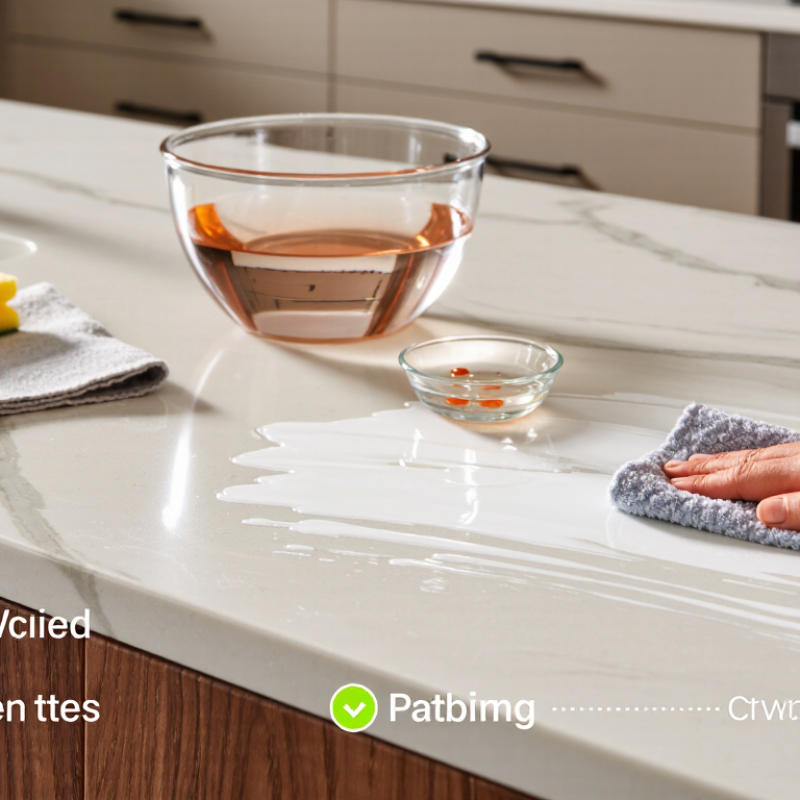
Quartz countertops are engineered surfaces: crushed quartz is combined with resin and pigments. Their dense surface resists many everyday spills, but it is not stain-proof or heat-proof. Resin can be damaged by high temperatures, and dried food can still cling to seams and edges. A Houzz 2024 U.S. Kitchen Trends Study reported that 42% of surveyed homeowners chose quartz for their kitchen countertops. That figure reflects preference, not cleaning performance, so it should not be mistaken for a durability test.
For daily care, use warm water, a little mild dish soap, and a soft microfiber cloth. Wipe spills promptly, especially coffee, wine, or oily sauces. Small detail, big difference. Avoid abrasive pads and strong acidic or alkaline cleaners; they may dull the finish or affect the resin. Use a trivet under hot pans, even if the surface feels stone-hard. I have sometimes let a splash dry near the sink and then scrubbed too hard; that is exactly the habit to avoid. Because resin blends and care instructions vary, check the countertop’s own care guide before trying a new cleaner.
| Cleaning Need | Recommended Method | How Often | Important Notes |
|---|---|---|---|
| Everyday dust and light residue | Wipe the surface with a soft microfiber cloth dampened with warm water and a small amount of mild dish soap. Rinse with clean water and dry with a soft cloth. | As needed, usually during daily kitchen cleanup | Drying helps reduce water spots, especially in areas with hard water. |
| Food and drink spills | Blot or wipe up the spill promptly with a soft cloth. Clean any remaining residue with warm, soapy water, then rinse and dry. | As soon as practical | Quartz is nonporous, but prompt cleanup helps prevent residue from drying onto the surface. |
| Dried food or sticky residue | Soften the residue with warm, soapy water. Gently lift it with a plastic scraper or a nonabrasive pad, then rinse and dry. | When residue is noticed | Keep the scraper flat and use light pressure. Avoid metal blades and abrasive scouring pads. |
| Grease or oily marks | Use warm water with mild dish soap and a soft cloth. For stubborn residue, use a cleaner labeled safe for quartz and follow its directions. | As needed | Rinse the surface after cleaning so no cleaner film remains. |
| Routine disinfection | Clean first with soap and water. If disinfection is needed, choose a product specifically labeled as safe for quartz and follow the label instructions. | When appropriate for household hygiene | Test unfamiliar products in an inconspicuous area and do not leave cleaners on the surface longer than directed. |
| Heat and hot cookware | Place hot pots, pans, and baking dishes on a trivet or heat-resistant pad rather than directly on the countertop. | Every time hot cookware is set down | Quartz contains resin, which can be damaged by high or sudden heat. A trivet is safer than relying on heat resistance. |
| Products and tools to avoid | Avoid abrasive powders and pads, strong alkaline or acidic cleaners, oven cleaners, paint removers, and products containing bleach unless the countertop care instructions specifically allow them. | Always | Cleaning guidance can vary by product and finish. Follow the countertop manufacturer’s care instructions when available. |
Wipe gently with a clean, dry microfiber cloth. Brush crumbs into your hand instead of dragging them across the surface. Grit can leave fine scratches.
Blot the spill promptly; do not rub. Wipe with warm water and a little mild dish soap, then rinse and dry. Check the edges.
Use warm water, mild dish soap, and a plastic scraper held nearly flat. Rinse and dry the spot. More scrubbing is not always better.
Soap residue may have dried on the surface. Wipe again with a rinsed cloth, then use a dry microfiber cloth. A faint film is easy to miss.
Avoid scouring powders, abrasive pads, and harsh cleaners. Some chemicals may affect the resin surface. Check your countertop’s care instructions before trying a stronger stain remover.
Yes. Heat may discolor or crack the surface. Place hot pans on a trivet. A quick pause helps.
Wipe it promptly, especially around seams where liquid can settle. Check the area after cleaning; I sometimes miss a damp edge until the light catches it.
No. It resists stains, but it is not stain-proof. Blot coffee, wine, or cooking oil quickly, and test any approved stain remover in a hidden spot.
Quartz countertops are durable and easy to maintain, but they still benefit from gentle, consistent care. To understand how to clean quartz countertops properly, begin by choosing safe supplies such as a soft cloth or sponge, warm water, and a mild dish soap. Avoid rough scouring pads and harsh cleaners that could dull the surface or damage its finish. Wipe away dust and loose debris first, and clean fresh spills promptly to help prevent them from setting.
Wash the countertop with soapy water, using gentle circular motions, then rinse with a clean, damp cloth to remove any residue. Dry the surface with a soft towel to reduce streaks and water marks. For stubborn stains, use a nonabrasive approach and allow the cleaning solution a short time to loosen the mark before wiping it away. Regularly removing spills and avoiding excessive force can help preserve the countertop’s appearance over time.

 Zenlith Stone
