When choosing a kitchen worktop, many homeowners ask, “does quartz stain or scratch easily?” The answer is more nuanced than a simple yes or no. Engineered quartz combines natural quartz minerals with resins and pigments. This structure creates a dense, nonporous surface that resists everyday spills, including coffee, wine, cooking oil, and tomato sauce.
Quartz is also relatively hard. Geologist Dr. Steven Earle explains, “Quartz has a hardness of 7 on the Mohs scale.” That hardness helps quartz resist scratches from ordinary kitchen activities. However, it does not make the surface indestructible. A sharp knife, gritty particles, or heavy cookware can still leave marks under the wrong conditions.
Staining is less common, but it remains possible. Strong pigments, prolonged exposure, and heat can affect the resin rather than the quartz mineral itself. A spilled berry juice may wipe away quickly today. Tomorrow, after several hours, the result could be different. That small detail is often overlooked.
Practical experience matters here. Clean spills promptly with mild soap and a soft cloth. Avoid abrasive powders, scouring pads, and harsh chemical cleaners. Never cut directly on the countertop. Use a board.
Quartz is durable.
Still, “low maintenance” does not mean “maintenance-free.” This guide examines how easily quartz can stain or scratch, what causes visible damage, and which cleaning habits protect its finish. It also considers an uncomfortable point: product quality, installation, and color can influence real-world performance.
Quartz’s Composition and Its Resistance to Staining and Scratching
How Easily Does Quartz Stain or Scratch?
Quartz surfaces are engineered materials, not solid slabs of natural quartz. Industry technical literature commonly describes them as containing about 90–95% ground quartz, bound with polymer resins and pigments. The quartz particles provide hardness, while the resin helps create a dense, nonporous surface. This composition explains the balance: quartz resists everyday staining well, but its resin content can react poorly to intense heat, harsh chemicals, or prolonged exposure.
Laboratory testing often references standards such as ASTM C241 for abrasion resistance and ASTM C373 for water absorption. The Natural Stone Institute’s Dimension Stone Design Manual also emphasizes low absorption and correct maintenance for engineered surfaces. In daily use, coffee, cooking oil, and red wine usually remain on the surface rather than penetrating deeply. Wipe them promptly. Dried residue may still leave a dull patch or visible outline.
Scratching is less common than staining, but it is not impossible. Quartz can resist normal contact with plates, utensils, and food containers. Sand grains under a ceramic bowl can behave differently. Do not cut directly on the counter. Avoid abrasive powders and rough scouring pads, even when the surface appears tough.
There is an uncomfortable detail: laboratory results cannot perfectly predict a busy kitchen. A test panel never experiences years of sliding cookware, grit, and rushed cleaning. That limitation deserves attention.
How Easily Quartz Surfaces Become Stained in Daily Use
Quartz surfaces usually resist staining because their engineered structure has very low porosity. Daily use still creates vulnerable moments. Coffee left beneath a mug can form a brown ring, while cooking oil may leave a dull, greasy patch near the hob.
Wipe spills promptly.
In my experience, turmeric, red wine, beetroot, and dark cosmetics deserve quick attention. A soft cloth, warm water, and mild dish soap handle most fresh marks. Letting residue dry overnight makes cleaning harder, even when the surface is technically nonporous. Avoid scouring powders, rough sponges, and strong solvents. They may dull the finish or damage surrounding materials.
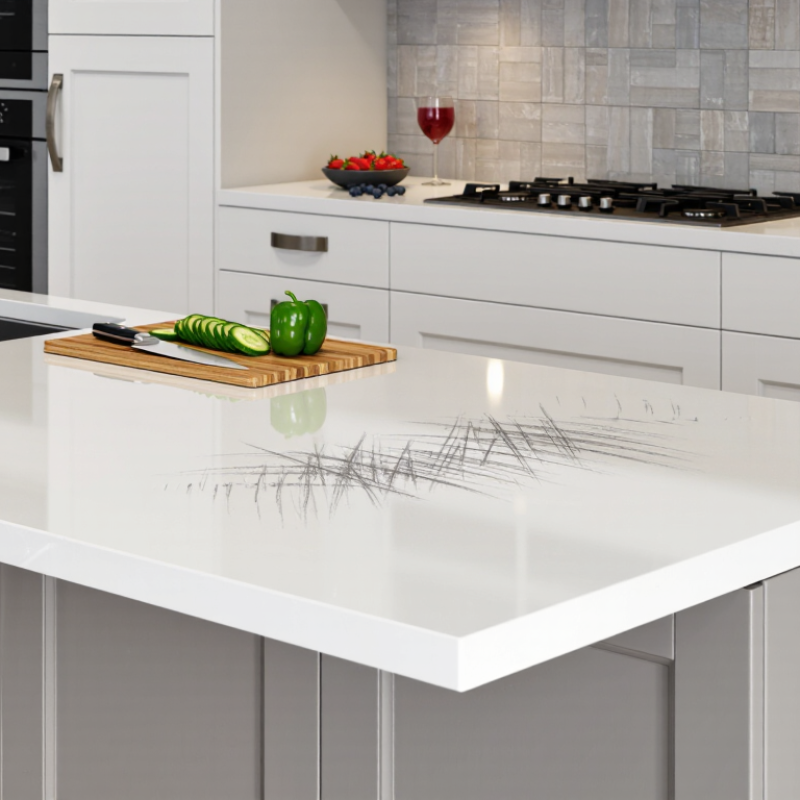
Some marks are not stains at all. Metal pans can leave gray streaks, and gritty dust can create tiny scratches during wiping. Quartz resists everyday abrasion, but it is not scratch-proof.
Use a cutting board, lift ceramic containers, and brush away sand before cleaning. Harsh sunlight can also reveal uneven discoloration over time, depending on the material and installation.
A small mistake matters.
I once used too much cleaner on a pale counter and noticed a cloudy film rather than a true stain. It needed several gentle washes. That experience changed my routine: I now test unfamiliar products in a hidden corner and photograph stubborn marks under natural light. This prevents repeated scrubbing, which can cause more trouble than the original spill.
Common Causes and Types of Scratches on Quartz
How Easily Does Quartz Stain or Scratch?
Common Causes and Types of Scratches on Quartz
Quartz surfaces resist everyday staining, but they are not impossible to scratch. In regular kitchen use, fine grit often causes more trouble than a single sharp object. Sand, crumbs, or dried food beneath a pan can act like sandpaper when dragged across the surface. Metal tools may also leave gray transfer marks. These marks can look serious, yet some sit on top of the quartz and clean away with a soft cloth.
There are several types of scratches. Hairline scratches appear as thin, faint lines under bright light. Shallow scratches usually result from sliding cookware, small appliances, or ceramic dishes. Deep gouges may come from knives, heavy tools, or a strong impact near an edge. Edges deserve extra care. They are more vulnerable than broad, flat areas. I have found that careless dragging causes more visible damage than normal cutting, although each surface can respond differently.
A simple inspection helps. Wipe the area with warm water and a mild, non-abrasive cleaner. If the line disappears, it may be residue or metal transfer rather than a true scratch. Never test the surface with a knife. That only creates avoidable damage. Use cutting boards, lift objects instead of sliding them, and remove loose grit quickly. My earlier assumption was that quartz needed little protection; experience proved otherwise. Durable does not mean careless-use proof.
Cleaning Methods for Stains and Minor Surface Damage
Quartz is durable, but it is not completely stain-proof or scratch-proof.
Daily spills usually stay on the surface when cleaned promptly. Coffee, cooking oil, and red sauces can leave dull marks if they dry. Warm water, mild dish soap, and a soft microfiber cloth handle most fresh spills. Wipe in small circles, then dry the area thoroughly.
For dried residue, place a damp cloth over the spot for several minutes. Gently loosen it with a plastic scraper, keeping the edge nearly flat. Never use steel wool, abrasive powders, or rough scouring pads. They can create fine scratches that become visible under strong kitchen lighting. A non-abrasive, pH-neutral cleaner may help with stubborn marks, but test it on a hidden area first. Follow the cleaner’s label carefully.
Minor surface damage needs honest expectations.
Light scuffs may become less noticeable after careful cleaning, but they rarely disappear completely at home. Deep scratches, chips, and heat discoloration require assessment by a qualified stone professional. Avoid placing hot pans directly on the counter. Use a trivet, even for a pan that feels only warm. I have found that rushed cleaning causes more trouble than the original spill. Still, some stains resist patience, and home methods are not always enough. Stop if the surface changes color or texture.
Ways to Prevent Stains and Scratches on Quartz Countertops
How Easily Does Quartz Stain or Scratch?
Quartz is highly resistant to everyday staining, but it is not stain-proof. The 2024 Houzz U.S. Kitchen Trends Study reported engineered quartz in about 42% of upgraded countertops, reflecting its practical appeal. Its dense surface usually blocks coffee, oil, and juice from penetrating quickly. Wipe spills with warm water and a soft microfiber cloth. Do not leave turmeric, red wine, or permanent marker overnight. Small delays create avoidable problems.
Use cutting boards, even when preparing bread or fruit. Quartz can resist ordinary knife contact, but sharp blades may leave dull marks or damage the surface finish. Place trivets beneath hot pans. Sudden heat can stress the resin portion of engineered quartz. NSF/ANSI 51 addresses materials used around food equipment, but compliance does not guarantee scratch or stain immunity. That distinction is often missed.
Choose a pH-neutral cleaner without bleach, strong solvents, or abrasive powder. A soft sponge works better than a rough scouring pad. Grit under a ceramic bowl can act like sandpaper, so lift objects instead of sliding them. Clean spills promptly, especially around seams and sink edges. One imperfect habit remains common: using the countertop as a cutting board because it feels durable. Durability is not permission. Keep cleaners in their original containers, and test unfamiliar products on a hidden area first.
How Easily Does Quartz Stain or Scratch?
Quartz is engineered with natural quartz minerals, which have a Mohs hardness of about 7. The reference values below show why everyday items such as fingernails, copper coins, glass, and typical steel tools are unlikely to scratch quartz during normal use.
How to prevent scratches: Use a cutting board, avoid dragging heavy or gritty objects across the surface, and lift countertop appliances instead of sliding them. How to prevent stains: Wipe spills promptly, especially coffee, wine, oil, and strongly colored foods, and clean with mild soap and water. Avoid abrasive pads, harsh chemicals, and prolonged exposure to aggressive cleaners.
Hardness values are approximate Mohs-scale references. Quartz countertop performance can vary by composition, finish, and installation quality.
Conclusion
Quartz countertops are made from a blend of natural quartz minerals and durable binding materials, giving them strong resistance to everyday stains and surface damage. Still, the question “does quartz stain or scratch easily” depends on how the surface is used and maintained. Spills from coffee, tea, oil, acidic foods, or strongly colored ingredients may leave marks if they remain on the countertop for too long, especially around textured areas, seams, or damaged spots. Scratches are less common but can result from dragging rough cookware, cutting directly on the surface, or contact with abrasive tools and particles.
Most fresh stains can be removed with a soft cloth, warm water, and a mild cleanser. Minor surface marks may improve with careful cleaning, but deep scratches or chips should be assessed by a qualified professional. To protect quartz, wipe spills promptly, use cutting boards and trivets, avoid harsh chemicals and abrasive pads, and lift heavy or gritty objects instead of sliding them across the surface.

 Zenlith Stone
