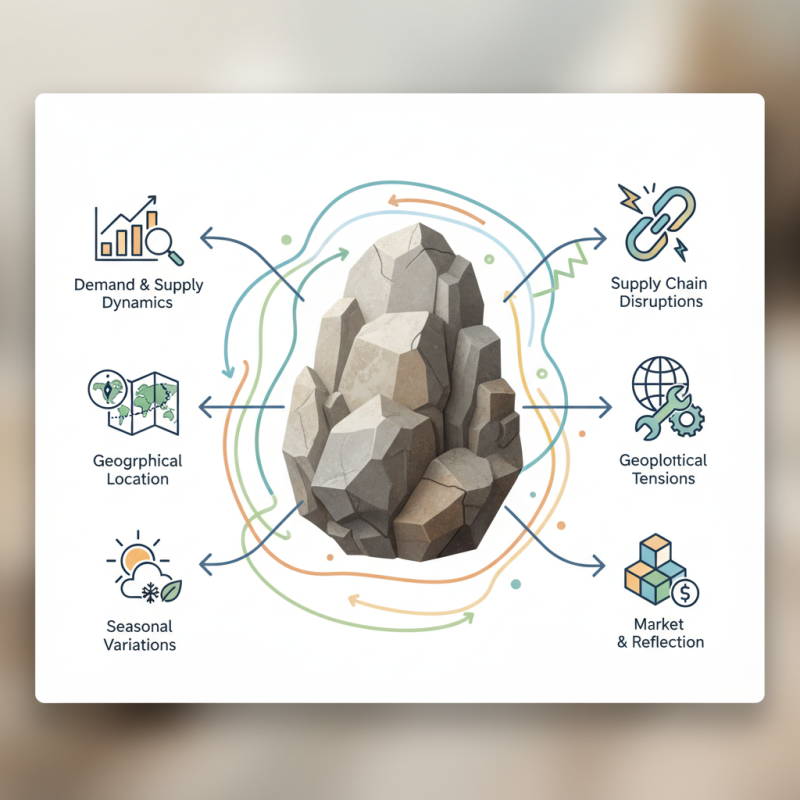
The stone market is complex and influenced by various factors. Understanding what affects stone pricing in the market is essential for buyers and sellers alike. According to a report from the Global Stone Industry, stone prices can fluctuate significantly based on demand and supply dynamics. For example, the demand for natural stone in construction rose by 10% in 2022, impacting prices considerably.
Geographical location plays a critical role too. Regions rich in resources often offer lower prices due to reduced transportation costs. A study by the Stone Council highlights that local availability can decrease prices by up to 30%. Additionally, seasonal variations, such as weather patterns, impact quarrying schedules, further influencing stone pricing.
Supply chain disruptions can create uncertainty. Events like natural disasters or geopolitical tensions may cause price spikes. As noted by industry analysts, these disruptions affected prices by as much as 15% in the last quarter. Each of these factors contributes to a dynamic pricing environment that requires continuous market analysis and reflection. Understanding these complexities can lead to better decision-making for stakeholders.
Stone pricing in the market is influenced by several key factors. One major aspect is the quality and type of stone. Natural stones like granite or marble often command higher prices, with granite averaging around $60 to $100 per square foot, as noted in a recent industry report. The source of the stone also plays a significant role; for instance, rare types of stone from specific regions can fetch premium prices due to limited availability.
Market demand is another significant factor. Demand can fluctuate based on construction projects, renovations, and consumer preferences. For instance, a surge in residential construction can lead to increased prices as suppliers respond to higher requests. Additionally, economic conditions, such as inflation or changes in building regulations, can further impact stone prices.
Tip: Always compare prices from multiple suppliers. This strategy helps in understanding the average market rates and identifying better deals.
Competition among suppliers is also essential. As more companies enter the market, prices may stabilize or even decrease. However, the quality must be scrutinized. Low prices can sometimes indicate inferior quality. Understanding these dynamics helps consumers make more informed choices.
Tip: Consider the long-term value of your stone investment. Sometimes paying more upfront can lead to better durability and decreased maintenance costs.
When assessing stone pricing in the market, understanding the types of stones is crucial. Different stones vary dramatically in their costs due to factors like rarity and extraction methods. For instance, natural stones like marble and granite can fetch a premium price, often reaching $100 to $300 per square foot, according to the National Stone Institute. Meanwhile, more abundant stones, such as limestone, may retail for as low as $30 per square foot. This discrepancy significantly impacts overall project budgets.
The finishing process also influences stone pricing. Polished surfaces require more labor and technology, increasing costs. A report by the International Stone Institute highlights that polished granite can cost over 20% more than its rough counterpart. Thus, the desired finish can alter the budget. Remember to consider both the stone type and its processing when planning your next project.
Tips: Understand your needs before making a decision. Research different stones and their properties. Don't overlook lesser-known options for cost savings. Always consult with professionals for accurate stone assessments.
The stone market operates on a delicate balance of supply and demand. When demand surges, prices often rise sharply. This fluctuation can often be linked to trends in construction and landscaping. As more projects arise, the need for various stones increases. However, the supply chain can be unpredictable. Natural disasters can disrupt mining and transportation.
On the supply side, different stones have varying availability. Some types, like granite, are more abundant than rare stones, such as onyx. When a particular stone gains popularity, producers may struggle to meet that demand. Understanding local and global extraction capabilities is crucial.
Consumer preferences also play a significant role in stone pricing. A newfound trend in interior design can lead to spikes in certain stone sales. This market can also be influenced by economic downturns. If budgets tighten, less expensive stones may see increased demand. Thus, the stone market is a complex web of interactions that requires constant monitoring.
Geographical factors play a pivotal role in determining stone availability and pricing. Different regions produce various types of stone, each with unique characteristics. For instance, granite is prevalent in North America, while marble can often be found in Italy and Greece. The proximity of quarries affects transportation costs, which considerably impacts market pricing. Reports suggest that freight costs can account for up to 15% of the total price, especially for heavy materials like stone.
Local regulations and labor markets also influence stone costs. Regions with stringent mining regulations may have higher operational expenses. For example, a recent study noted that states with more robust environmental regulations saw increases in pricing by up to 20% compared to less regulated areas. Additionally, labor shortages or wage disparities can further affect pricing structures. In areas where skilled labor is scarce, stone extraction and processing costs can spike.
Availability can also be affected by natural events. Factors like weather and geological conditions can disrupt supply chains. A significant disruption in one region may cause ripple effects across global markets, resulting in price volatility. Understanding these intricacies is essential for industry professionals and buyers alike, as they navigate the complexities of stone pricing.
| Stone Type | Geographical Region | Average Price per Ton ($) | Availability (Tons) | Transportation Cost Factor ($) |
|---|---|---|---|---|
| Granite | North America | 100 | 50,000 | 15 |
| Marble | Europe | 150 | 30,000 | 20 |
| Limestone | Asia | 75 | 70,000 | 10 |
| Slate | South America | 200 | 20,000 | 25 |
| Sandstone | Africa | 65 | 40,000 | 12 |
Market trends play a significant role in stone pricing. As consumer preferences shift, so do the costs associated with various types of stone. For instance, eco-friendly stones are gaining popularity. This trend leads to increased demand, subsequently raising prices. Consumers are more inclined toward materials that align with their values, influencing the overall market.
Another factor to consider is design trends in architecture and landscaping. Minimalist designs often call for specific stone types, which may not be as readily available. When supply is limited, prices rise. Additionally, seasonal variations impact demand, especially for landscaping stones. In peak seasons, costs can soar, pushing budgets higher for homeowners and contractors alike.
It’s worth noting that consumer preferences can be unpredictable. What is in vogue today may not hold the same appeal tomorrow. This volatility can lead to price fluctuations that challenge both buyers and sellers. Understanding these trends becomes essential for making informed decisions in the stone market.
: Key factors include stone quality, type, source, demand, economic conditions, and supplier competition.
Increased demand from construction or renovations can raise prices. Economic factors may also contribute to fluctuations.
Comparing prices helps understand market rates and find better deals. It can also reveal hidden quality differences.
Investing more upfront can lead to better durability and lower maintenance costs. It’s a decision worth reflecting on.
Demand surges can result in price increases, while supply chain disruptions can create shortages. It's a delicate balance.
Shifts in trends, like eco-friendly options or design styles, can affect demand and consequently raise prices unexpectedly.
Prices for landscaping stones often rise in peak seasons due to higher demand, complicating budgeting for projects.
Low prices may indicate inferior quality, making it essential for buyers to assess both cost and quality carefully.
Trends can change rapidly, leading to unpredictable price fluctuations. Both buyers and sellers must stay informed.
Limited supply of popular stones can drive prices up. Understanding this context can help in planning purchases.
The article "What Affects Stone Pricing in the Market" delves into the key factors influencing the pricing of stones. It begins by examining various factors, such as the types of stones available—each with unique characteristics that affect their market value. Additionally, the dynamics of supply and demand are crucial, as fluctuations in availability can lead to significant price changes.
Geographical influences also play a pivotal role, with certain regions having an abundance of specific stone types, thereby impacting their cost. Finally, market trends and consumer preferences are continuously evolving, dictating what affects stone pricing in the market. Understanding these elements is vital for stakeholders in the stone industry to navigate pricing strategies effectively.

Zenlith Stone