Engineered stone has gained popularity in the construction and design sectors due to its durability and aesthetic appeal. The key to this material lies in its composition. As industry expert Dr. Liang Chen explains, "Understanding what is engineered stone made of is vital for its effective application." This quote highlights the significance of knowing the materials involved.
Engineered stone is primarily composed of quartz, resins, and pigments. These components work synergistically to create a robust surface that mimics natural stone. However, not all engineered stones are created equal. Some may contain varying percentages of quartz, leading to inconsistencies in quality and performance.
Another important factor is the manufacturing process. Some manufacturers may cut corners, resulting in products that do not meet industry standards. The reliability of engineered stone often depends on the reputation of the producer. It’s essential for consumers and builders to prioritize quality over cost when considering what is engineered stone made of. As with any material, thoughtful evaluation is needed to ensure the right choice for specific applications.
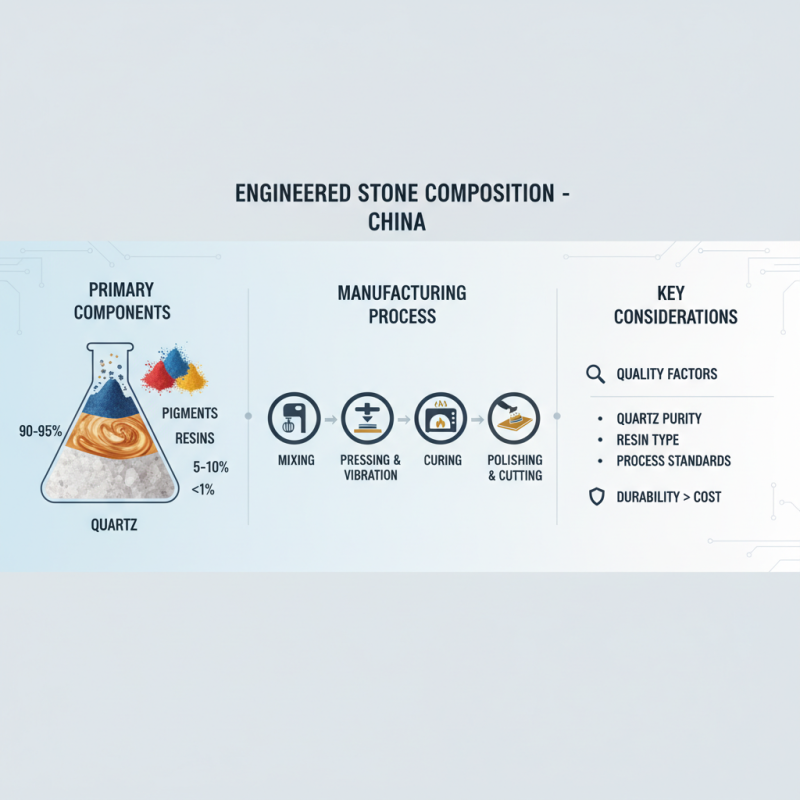
Composition of Engineered Stone in China
Engineered stone, commonly used in countertops and flooring, consists mainly of quartz and resin. In China, manufacturers blend about 90% crushed natural quartz with a small amount of resins and pigments. This combination creates a durable material that mimics the appearance of natural stone. High compression techniques are employed to enhance its density and strength.
The production process often raises concerns about environmental impacts. While engineered stone is sturdy, its production involves energy-intensive processes. Some may not consider the long-term sustainability of using such materials. Additionally, the use of synthetic resins can lead to questions regarding indoor air quality and potential health effects. Buyers must weigh the benefits of durability against these environmental factors.
Chinese manufacturers continuously seek improvements in the composition of engineered stone. They aim to use eco-friendly resins and reduce energy consumption during production. However, challenges remain in balancing performance and sustainability. Transparency in sourcing materials is also critical. Customers may need clarification on the origins of the quartz and resins used. This uncertainty can undermine trust in product quality.
What is Engineered Stone Made Of in China? - Composition of Engineered Stone in China
| Component |
Composition (%) |
Purpose |
| Natural Quartz |
90-95% |
Main structural component providing durability and hardness |
| Resin |
5-10% |
Acts as a bonding agent and adds flexibility |
| Color Pigments |
Variable (up to 1%) |
Enhances aesthetic appeal by providing various colors |
| Additives |
Variable (up to 5%) |
Improves properties like UV resistance and antibacterial characteristics |
Raw Materials Utilized in Engineered Stone Production
Engineered stone, a popular material in construction and design, primarily consists of a blend of natural minerals, resins, and pigments. In China, the raw materials used in its production are carefully selected to ensure durability and aesthetics. Quartz is the most prominent component, typically comprising around 90% of the mix. The remaining 10% includes resins and additives, which enhance the material’s strength and versatility. Industry reports indicate that the demand for quartz stone in China has surged. By 2023, this market was projected to exceed 6 billion USD.
In addition to quartz, recycled materials also play a crucial role. Many manufacturers incorporate stone scraps and other waste materials, promoting sustainability. This practice aligns with the growing trend of eco-friendly construction. However, while these practices are beneficial, the quality of recycled materials can vary, leading to inconsistencies in the final product. Some batches may not meet the standards expected by consumers, necessitating rigorous quality checks.
Pigments are crucial for achieving color variations in engineered stone. While they are essential for aesthetics, the sourcing of high-quality pigments can be challenging. Variability in pigment quality can affect the color and uniformity of the finished product. Producers must balance color variety with quality assurance, often leading to experimentation. The complexities in sourcing both raw materials and pigments highlight the intricacies of engineered stone production in China.
Manufacturing Process of Engineered Stone
The manufacturing process of engineered stone in China involves several key stages. It begins with the selection of raw materials, primarily quartz crystals, resins, and pigments. These materials are sourced locally to ensure quality. The quartz is crushed into fine aggregates. This creates a strong base for the final product.
Next, the ingredients are mixed together under vacuum conditions. This step prevents air bubbles from forming, which can weaken the stone. Once mixed, the blend is poured into molds. It is then compacted using high pressures. This process ensures a dense, durable product. After being cured in a controlled environment, the slabs are polished to achieve a glossy finish.
Quality control is critical throughout each stage. Engineers regularly test samples for strength and appearance. However, inconsistencies can arise, affecting the final product. For instance, color variation may occur due to pigment distribution. Manufacturers must address these challenges to maintain standards. Despite efforts, the need for continual improvement in the process remains essential.
Applications and Uses of Engineered Stone in China
Engineered stone, primarily composed of resin, aggregates, and pigments, finds extensive applications in various sectors in China. This man-made material is especially popular in both residential and commercial designs. Homeowners embrace it for kitchen countertops due to its durability and aesthetic appeal. In commercial settings, engineered stone is utilized for flooring, wall coverings, and decorative features, providing a high-end look without the cost of natural stone.
One notable aspect is its versatility. Engineered stone can mimic natural stones like marble or granite, offering a chic choice for designers. However, it can also pose challenges. For instance, some users report issues with scratching and heat resistance, prompting discussions about appropriate care.
Tips: Regular maintenance can extend the life of engineered stone surfaces. Always use coasters and cutting boards to prevent damage. When cleaning, avoid harsh chemicals. Instead, opt for mild soap and water. Another consideration is the environmental impact of production. Striving for sustainable practices in sourcing materials is crucial. As the market grows, remaining mindful of these factors can enhance both usability and responsibility.
Comparison with Natural Stone and Other Materials
Engineered stone, widely produced in China, combines crushed natural stones with resin, polymers, and pigments. This mixture creates a durable material that resembles natural stone in appearance but offers distinct advantages. One key difference lies in the consistency of its color and texture. Natural stone exhibits variations in patterns and colors, while engineered stone provides a uniform look.
In comparison to other materials, like quartz and granite, engineered stone delivers more versatility. It is less porous than natural stone, making it resistant to stains and easier to maintain. However, some may find its synthetic aspect lacks the authenticity inherent in natural stone. While engineered stone can replicate the look of marble, the feel and weight might differ, prompting reflections on the desired aesthetic.
Choosing between engineered and natural stone involves personal preferences and practical considerations. Natural stone boasts a timeless appeal and unique characteristics, while engineered stone offers durability and ease of use. This decision isn't straightforward and demands careful thought about the intended application and environment.
FAQS
: Engineered stone consists mainly of about 90% crushed natural quartz and 10% resins and pigments.
It offers durability, a consistent appearance, and is less porous than natural stone, making it stain-resistant.
Yes, its production involves energy-intensive processes, and synthetic resins may affect indoor air quality.
Some manufacturers are using eco-friendly resins but face challenges in balancing performance and environmental sustainability.
The quality of recycled materials can be inconsistent, leading to variations in the final product’s quality.
Consumers must think about aesthetics, functionality, durability, and maintenance needs in their decision-making process.
Yes, engineered stone can mimic the appearance of natural stone but may lack its authentic feel and weight.
Sourcing high-quality pigments can be difficult, and variability can affect color and uniformity in the finished product.
Engineered stone provides a uniform look, while natural stone has variations in patterns and colors.
Yes, engineered stone is generally easier to maintain due to its non-porous nature and resistance to stains.
Conclusion
Engineered stone, commonly used in various applications across China, is known for its durability and aesthetic appeal. When exploring "what is engineered stone made of," it is essential to note that its primary composition includes a mix of natural stone aggregates, resin, and pigments. The manufacturing process involves combining these raw materials under high pressure and temperature, resulting in a versatile product that can mimic the appearance of natural stones.
In terms of applications, engineered stone is widely utilized in countertops, flooring, and wall cladding due to its resilience and design flexibility. When compared to natural stone and other materials, engineered stone offers additional benefits such as uniformity, ease of maintenance, and a wider range of colors and finishes, making it a popular choice in modern architecture and interior design in China.

 Zenlith Stone
