How to Choose the Right Stone Within Your Budget?

Time:2026-09-23 Author:Isabella
0%

Choosing stone for a renovation can feel like comparing paintings in a crowded gallery. Marble may offer dramatic veining, while granite often provides practical strength. Quartzite can look luxurious, but fabrication costs may surprise you. The real challenge is not finding the most beautiful slab. It is learning how to choose stone within a budget without sacrificing performance, appearance, or long-term value.

David Rockwell, an architect and respected design authority, says, “Good design is not just what it looks like and feels like. Good design is how it works.” His principle applies directly to stone selection. A suitable material must match the room, traffic level, maintenance routine, and available budget. A pale limestone sample may look elegant under showroom lights. It may also show stains beside a busy kitchen sink. Small details matter.

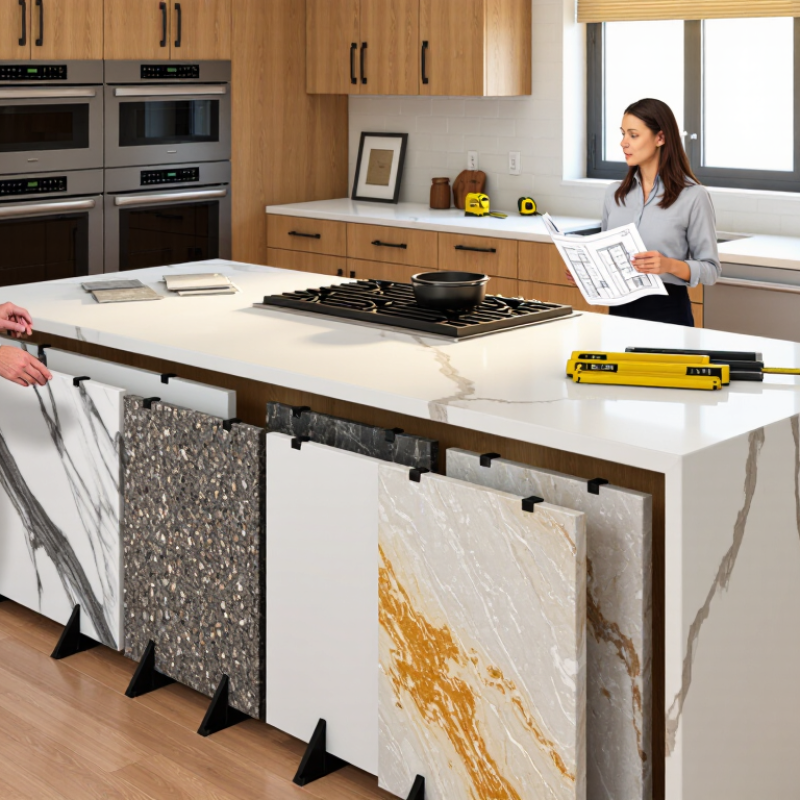
Begin with the complete cost, not only the price per square foot. Include delivery, templating, cutting, edging, installation, sealing, and possible waste. Ask the fabricator how many slabs your project needs. Bookmatched designs can increase waste quickly. Request physical samples, then view them beside your cabinets and flooring. Natural stone varies. That variation is beautiful, but it can also challenge expectations.

There is no perfect choice. A lower-cost stone may be smarter than an expensive one. Still, choosing purely by price can create regret. This guide examines durability, maintenance, sourcing, and visual impact. It also questions common assumptions, because a budget decision deserves more than a quick showroom answer.
How to Choose the Right Stone Within Your Budget?

Define Your Stone Project’s Purpose and Performance Needs

How to Choose the Right Stone Within Your Budget?

Define Your Stone Project’s Purpose and Performance Needs

Stone selection should begin with the project’s purpose, not its color. A kitchen countertop faces heat, moisture, stains, and daily cutting risks. A bathroom surface needs low water absorption and easy cleaning. Outdoor paving must withstand freezing temperatures, sunlight, and repeated foot traffic.

Consider how the space will be used every day. A busy family kitchen may need a harder, more stain-resistant stone than a decorative guest bathroom. For flooring, surface texture matters because polished finishes can become slippery when wet. In my experience, people often choose a beautiful sample first and check performance later. That order can create expensive regrets.

Tips: Ask for technical data before buying. Check water absorption, hardness, slip resistance, finish, and maintenance requirements. Compare samples under natural and artificial light. Place a sample near sinks, windows, or cooking areas to observe its practical appearance. Also ask how the stone may age. Some surfaces develop a softer character, while others show scratches clearly. Neither result is automatically bad, but it should match your expectations.

Budget planning should include installation, sealing, edge work, transport, and future care. A lower purchase price may not mean lower ownership costs. I would also allow a small contingency because measurements and breakage are not always predictable. Still, technical specifications cannot replace professional judgment. A qualified fabricator can identify weak areas, unsuitable thicknesses, and installation risks before the stone is cut.

Set a Realistic Budget Beyond the Purchase Price

A stone budget should begin with the installed result, not the slab price. In a showroom, a surface may look affordable. Then fabrication, edge profiles, sink cutouts, delivery, and installation can change the final number. Ask for an itemized estimate before choosing a color or pattern. Keep 10 to 15 percent for surprises. Existing cabinets may need leveling. Walls may be slightly uneven. These details are ordinary, not dramatic. Yet they can affect labor.

Measure the project with a qualified fabricator or experienced installer. Confirm slab dimensions, seam placement, thickness, finish, and backsplash requirements. A large island may require more than one slab, even when the room seems modest. Transportation also matters. Narrow stairs, long carries, or special lifting equipment can add fees. I once underestimated access and spent more than planned on handling. That mistake was avoidable. I should have asked about delivery earlier.

Compare complete quotes, not square-meter rates alone. Check whether sealing, support brackets, disposal, plumbing adjustments, and taxes are included. Some lower quotes exclude essential preparation. That is not always dishonest, but it creates confusion. Set a firm maximum and share it openly with the professional. They may suggest a simpler edge or different thickness. Leave room for maintenance, too. Natural stone may need periodic care, while other surfaces have different requirements. A beautiful choice is only sensible when its long-term costs fit your household.

Compare Stone Types by Cost, Quality, and Durability

How to Choose the Right Stone Within Your Budget?

Stone prices depend on more than appearance. The 2024 RSMeans Residential Cost Data places installed natural-stone work in a wide range, often about $50–$150 per square foot. Local labor, slab thickness, edge profiles, and waste can change the final quote. Ceramic or porcelain surfaces usually cost less, while granite and quartzite often require larger budgets. Marble may look luxurious, but softer areas can show scratches and etching quickly.

Compare performance, not just price. The Natural Stone Institute’s Dimension Stone Design Manual recommends checking absorption, density, flexural strength, and abrasion resistance. These tests follow methods such as ASTM C97 and ASTM C880. Granite generally offers strong scratch resistance and low absorption after proper sealing. Marble provides distinctive veining but needs gentler cleaning. Limestone feels warm and natural, yet its higher porosity demands care. Porcelain has consistent color and low water absorption, although cutting and edge finishing can increase installation costs.

Ask for the test results.

A practical comparison should include maintenance over ten years. Sealing, repairs, replacement risk, and cleaning products all affect ownership cost. I have seen attractive low quotes become expensive after poor substrate preparation or careless templating. That risk is easy to underestimate. Request a written specification, a physical sample, and an installer’s experience with the selected stone. Prices are only estimates, not promises. Local supply conditions may change them.

How to Choose the Right Stone Within Your Budget? — Compare Stone Types by Cost, Quality, and Durability

Stone Type Typical Installed Cost
(USD per sq. ft.)
Approx. Mohs Hardness Durability Heat & Scratch Resistance Stain & Etch Resistance Maintenance Best Value For Budget Suitability
Slate $50–$100 5–6 ★★★★☆ Very good Good resistance to heat and everyday scratching; edges may chip. Generally good when properly sealed; textured surfaces can collect dirt. Low to moderate; reseal periodically according to the sealer used. Rugged, natural-looking floors, walls, fireplace surrounds, and selected countertops. Lower to mid-range
Limestone $55–$120 3–4 ★★★☆☆ Moderate Moderate heat resistance; relatively soft and susceptible to scratching. Porous and vulnerable to acids, which can cause visible etching. Moderate to high; sealing and prompt spill cleanup are recommended. Soft, warm architectural styles, low-traffic floors, walls, and decorative applications. Lower to mid-range
Marble $60–$150 3–5 ★★★☆☆ Moderate Handles normal heat well, but scratches and edge damage more easily than granite. Porous and acid-sensitive; lemon, vinegar, and wine may etch the surface. Moderate to high; sealing helps stains but does not prevent acid etching. High-end appearance, bathrooms, fireplace surrounds, backsplashes, and careful-use kitchens. Mid to high-range
Soapstone $70–$120 1–2 ★★★☆☆ Moderate Excellent heat resistance; its softness means it can scratch and dent. Very low water absorption and strong stain resistance; acids generally do not etch it. Low; optional mineral oil can deepen color and make scratches less noticeable. Heat-exposed areas, farmhouse kitchens, laboratory-style surfaces, and rustic interiors. Mid-range
Granite $60–$150 6–7 ★★★★★ Excellent Excellent heat and scratch resistance for normal residential use. Low to moderate porosity; many slabs benefit from periodic sealing. Low; clean with a pH-neutral product and reseal when needed. Busy kitchens, bathrooms, outdoor kitchens, and long-term durability at varied price points. Mid to high-range
Engineered Quartz $70–$150 Approximately 7 ★★★★☆ Very good Very good scratch resistance; prolonged direct heat can damage the resin binder. Very low porosity and strong stain resistance; acids generally do not etch the surface. Low; normally does not require sealing. Low-maintenance kitchens and bathrooms requiring consistent color and easy cleaning. Mid to high-range
Quartzite $80–$200+ Approximately 7 ★★★★★ Excellent Excellent heat and scratch resistance, although edges can still chip from impact. Usually requires sealing because natural quartzite can absorb liquids. Low to moderate; clean spills promptly and reseal as recommended. Premium kitchens seeking a natural-stone appearance with high hardness and durability. High-range
Porcelain Slab $60–$150 Approximately 6–7 ★★★★☆ Very good Excellent heat, UV, and scratch resistance; thin slabs and edges require careful handling. Very low absorption and strong stain resistance; generally resistant to household acids. Low; usually does not require sealing. Contemporary interiors, outdoor applications, walls, and surfaces requiring UV resistance. Mid to high-range

Cost ranges are typical installed U.S. residential estimates and may vary by region, slab thickness, edge profile, project size, fabrication complexity, demolition, and installation access. Mohs hardness indicates scratch resistance, not resistance to staining, impact, or heat.

Evaluate Size, Finish, Color, and Maintenance Requirements

Choosing stone within budget starts with dimensions, not color. Measure the countertop, backsplash, and installation gaps carefully. A larger slab may reduce seams, but it can increase handling and delivery costs. The 2024 U.S. Houzz Kitchen Trends Study surveyed more than 1,000 homeowners, showing that renovation decisions often balance appearance with practical performance. That balance matters.

Finish changes both price and daily maintenance. Polished surfaces reflect light and make dark colors appear richer. Honed finishes hide small scratches but may show oil marks more clearly. Leathered finishes add texture, yet cleaning can require more attention around ridges. The Natural Stone Institute recommends matching cleaning methods to the stone’s porosity and mineral composition. Never assume every pale stone needs the same sealer.

Color should be checked beside cabinet doors and under warm evening light. A cool gray sample can look blue at night. Ask for a full-size sample, not only a small showroom chip. The U.S. Geological Survey’s 2024 Mineral Commodity Summaries confirms that stone supply and production vary by material and region, which can affect availability and transport costs. I once underestimated edge profiles and wasted part of the allowance. That mistake still influences my advice: reserve 10–15% for fabrication changes, sealing, and unexpected damage. Some estimates feel precise, but stone rarely behaves perfectly.

Select the Best Stone and Confirm the Total Installation Cost

Choosing the right stone begins with the complete installed price, not the slab’s showroom label. A beautiful quartzite may exceed your budget after fabrication, delivery, sink cutouts, edging, backsplash work, and plumbing adjustments. According to Angi’s 2024 countertop installation data, typical projects often range from about $1,850 to $4,350, depending on material, size, labor, and regional rates. Treat that range as a guide, not a promise.

Ask a qualified fabricator to measure the space before ordering stone. Request a written quotation with every line item shown. Include demolition, disposal, templating, seams, edge profiles, cutouts, installation, sealing, and taxes. Natural Stone Institute guidance also emphasizes proper selection, fabrication, and maintenance because stone performance depends on its specific mineral composition. A porous surface may require regular sealing. Engineered stone can reduce maintenance, but its price and heat limitations still need review.

Measure twice. Then question the estimate.

Leave a 10% to 15% contingency for hidden conditions, especially in older kitchens. Uneven cabinets, damaged subfloors, or difficult stair access can increase labor costs. I have seen homeowners compare only price per square foot, then discover that a complex edge profile added hundreds of dollars. That mistake is easy to repeat. Ask for two or three comparable quotes, confirm the installation schedule, and inspect the slab personally when possible. Color variation is natural, but unexpected charges should not be.

How to Choose the Right Stone Within Your Budget?

Compare the estimated material and installation costs before selecting a stone. These typical U.S. residential estimates are shown in USD per square foot; actual pricing varies by thickness, finish, layout, site conditions, and local labor rates.

FAQS

What should a stone countertop budget include?

Include the slab, fabrication, edge profiles, sink cutouts, delivery, installation, taxes, and plumbing adjustments. Keep 10–15% for surprises. Do not trust the display price alone. A low quote may exclude essential preparation.

Why should I request an itemized estimate?

An itemized estimate shows where your money goes. Check sealing, support brackets, disposal, leveling, and backsplash work. Ask before choosing a color. Clear details prevent unpleasant surprises later.

How can access affect installation costs?

Narrow stairs, long corridors, and difficult parking can increase handling fees. Special lifting equipment may also cost extra. Ask about access early. I once underestimated this detail and exceeded my budget.

How should I compare different stone materials?

Compare appearance, absorption, scratch resistance, durability, and maintenance needs. Granite usually handles scratches well after suitable sealing. Marble offers striking veins but can show etching. Porcelain resists water, though edge finishing may cost more.

What information should I request about stone quality?

Request test results for absorption, density, strength, and abrasion resistance. Also request a physical sample and written specifications. Ask for installer experience with the selected material. Prices are estimates, not promises.

How do finish choices affect daily care?

Polished surfaces reflect light and emphasize rich colors. Honed finishes can hide small scratches but show oil marks. Textured finishes may trap dirt around ridges. Cleaning requirements vary by material.

How can I check whether a color suits my room?

Place a large sample beside cabinet doors and flooring. Check it during daylight and warm evening lighting. A cool gray may appear blue at night. Small samples can mislead you.

What measurements should I confirm before ordering?

Measure countertops, backsplashes, gaps, slab dimensions, thickness, and seam locations. A large island may need multiple slabs. Confirm cabinet leveling and wall conditions. Measure twice. I still sometimes underestimate fabrication waste.

Conclusion

Choosing the right stone within your budget begins with understanding the purpose of your project and the performance the material must deliver. Consider whether the stone will be used for flooring, countertops, walls, outdoor areas, or another application, then assess factors such as strength, water resistance, heat resistance, and expected traffic. Set a realistic budget that includes more than the purchase price, allowing for delivery, preparation, installation, sealing, waste, and future maintenance. Comparing different stone types by cost, quality, appearance, and durability can help you identify the best overall value rather than simply the lowest price.

When learning how to choose stone within a budget, also evaluate the impact of slab or tile size, surface finish, color, pattern, and cleaning requirements. A lower-cost option may require more maintenance, while a slightly higher initial investment could provide better long-term performance. Before making a final decision, request detailed estimates, confirm measurements, discuss installation conditions, and review all additional charges. This approach helps you select a practical, attractive stone while keeping the complete project cost under control.

Isabella

Isabella

Isabella is a dedicated marketing professional with a sharp focus on driving brand growth and engagement through strategic content creation. With an extensive background in digital marketing, she combines her passion for storytelling with her keen understanding of industry trends to deliver......