Choosing a countertop is not only about color, texture, or price. Daily maintenance matters just as much. A beautiful surface can become frustrating when it absorbs oil, stains easily, or demands frequent sealing.
So, which stone is easiest to maintain? The answer depends on your room, habits, and tolerance for small marks. In many busy kitchens, engineered quartz offers a practical balance. Its nonporous surface usually resists spills and does not require routine sealing. Porcelain surfaces can also perform well, especially where heat, moisture, and strong cleaners create regular challenges.
Natural stones need a closer look. Granite is durable and often manageable with periodic sealing. However, its maintenance needs vary by mineral structure and finish. Marble can develop etching from lemon juice, wine, or vinegar. That soft, cloudy mark is not always a removable stain. Soapstone resists many chemicals, yet it may show scratches and requires owners to accept gradual patina.
Reliable guidance should come from fabricators, stone-care professionals, and established industry references, such as Natural Stone Institute recommendations. Product labels still matter. A cleaner suitable for quartz may damage a polished natural stone. Never assume.
Small habits matter most.
Wipe spills quickly, use cutting boards, and avoid abrasive pads. Test any cleaner on a hidden area first. Even experienced homeowners sometimes choose a surface based on showroom lighting, then regret ignoring installation quality or edge damage. This guide compares real maintenance demands, not just marketing claims. It also examines overlooked details, including water spots, resealing schedules, repair access, and how each material ages in everyday use.
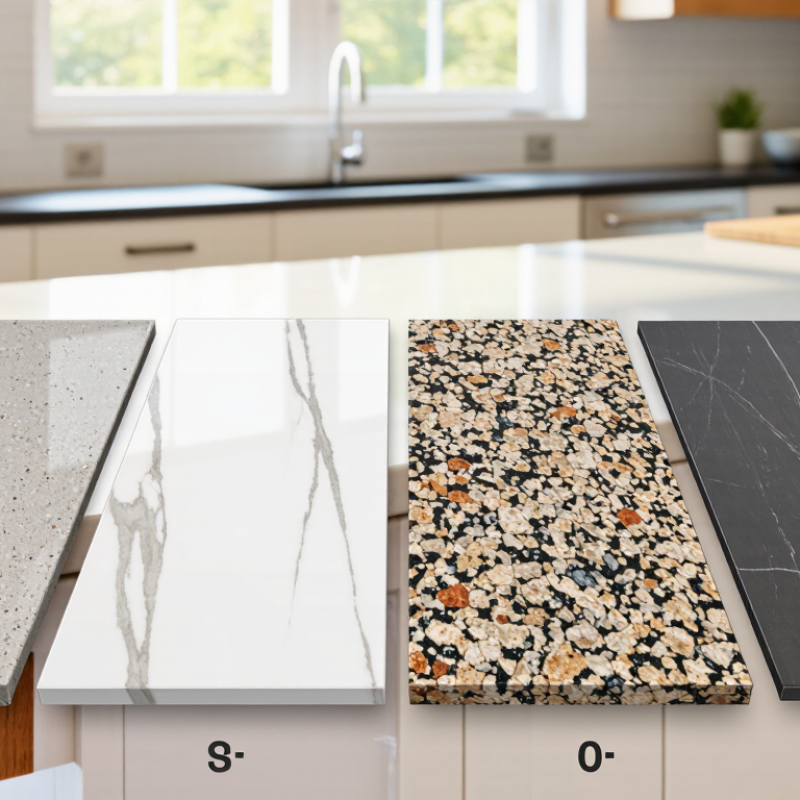
What Makes a Stone Easy to Maintain in 2026?
In 2026, easy maintenance means fewer weak points, not simply a glossy surface. The key tests are practical. Low water absorption helps resist coffee, oil, and cooking stains. ASTM C97 measures absorption and density in natural stone. Lower absorption usually means fewer sealing concerns. Chemical resistance matters near sinks and cooktops. ASTM C650 evaluates resistance to household chemicals. A smooth, properly finished edge also traps less grime. Still, textured surfaces can hide crumbs.
Houzz’s 2024 U.S. Kitchen Trends Study reported quartz as the leading countertop choice, selected by 39% of renovating homeowners. That figure shows strong consumer confidence, not permanent proof of superior performance. The Natural Stone Institute notes that sealers improve stain resistance but do not make stone stain-proof. This distinction is easy to miss. Even low-porosity materials can show oily marks around seams and edges.
For daily care, choose a surface that tolerates pH-neutral cleaner, soft microfiber cloths, and quick spill removal. Avoid abrasive powders and strongly acidic products. Ask fabricators for absorption, chemical-resistance, and repair guidance before purchase. Inspect a sample under kitchen lighting. Dark polished stone may reveal fingerprints more clearly than expected. I would not choose by showroom shine alone. Maintenance is often decided at the sink, where water, grit, and rushed cleaning meet.
Typical routine resealing frequency over five years. Lower values generally indicate less ongoing maintenance.
Porcelain and engineered quartz typically do not require routine sealing. Granite commonly needs periodic resealing, while marble and limestone usually require more frequent protection because they are porous and more sensitive to staining and etching. Actual requirements vary by finish, installation, and use.
The easiest stone to maintain depends on porosity, hardness, finish, and daily use. Low-porosity stone usually resists coffee, oil, and cooking stains better. Dense surfaces also absorb less moisture near sinks and showers. However, hardness alone does not guarantee easy care. A polished finish can show fingerprints, while a honed finish may hide them better. Check the surface in natural daylight before choosing.
In real homes, maintenance changes with habits. A busy kitchen needs strong stain resistance and simple cleaning. A bathroom needs reliable moisture performance and careful edge sealing. Ask for an absorption test or a sample before installation. Place red wine, lemon juice, and cooking oil on the sample, then inspect it after several hours. This small test can reveal problems that showroom lighting hides.
I once trusted a beautiful sample too quickly, and the finished surface needed more wiping than expected.
Tips:
Care requirements matter more than appearance when comparing popular stone surfaces. Quartz is often the simplest choice for busy kitchens because its nonporous surface resists routine stains. Wipe spills quickly with mild soap and water. Heat still matters. Hot pans can damage the resin, so always use a trivet. Strong sunlight may also affect some colors over time.
Porcelain offers excellent resistance to moisture, stains, and household chemicals. Its dense surface suits bathrooms, outdoor areas, and family kitchens. However, cutting edges can chip during transport or installation. Professional fitting is essential.
Granite is durable and usually forgiving, but many varieties need periodic sealing. A simple water-drop test can reveal whether the surface still repels moisture. This practical check is useful, although it is not a complete professional assessment.
Marble creates a refined appearance but demands more attention. Lemon juice, vinegar, and wet metal can leave dull marks or discoloration. Limestone is even more absorbent and may show oil near a cooker. Use pH-neutral cleaners, soft cloths, and separate cutting boards. Avoid abrasive powders.
A small sample test is wise before applying any cleaner across the whole surface. Even careful advice has limits, because finish, color, installation quality, and household habits change maintenance needs. Edges need attention. Children, pets, and frequent cooking can expose weaknesses that showroom samples never reveal.
In 2026, “easy to maintain” depends on location, traffic, heat, and staining risk. For kitchen counters, engineered quartz remains a practical choice. The 2024 Houzz U.S. Kitchen Trends Study reported quartz as the leading countertop material, chosen by roughly four in ten renovating homeowners. Its non-porous surface usually needs no sealing. Wipe coffee, oil, and tomato residue promptly. Still, it can discolor near high heat or strong sunlight. “Maintenance-free” is an overstatement.
For busy floors, porcelain stone-look slabs offer consistent color, low water absorption, and simple cleaning. They suit entryways, bathrooms, and commercial corridors where sand acts like fine sandpaper. The Natural Stone Institute’s Dimension Stone Design Manual recommends matching absorption, finish, and traffic conditions before selection. Polished granite also performs well on counters and vanities, especially when its surface is sealed correctly. A small annual inspection is sensible, although many homes need less frequent resealing. Experience matters here; cooking habits change the answer.
Outdoor patios need freeze-thaw resistance, drainage, and a textured finish. Dense granite and properly rated porcelain usually demand less care than limestone or marble. Limestone can develop dark patches around planters, while marble may etch under lemon juice. The U.S. Geological Survey’s Mineral Commodity Summaries 2025 shows the enormous scale of crushed-stone production, but volume does not equal suitability. Ask for technical absorption and slip-resistance data, not just a color sample. I would test one installed piece first. Mistakes become expensive after fabrication.
How to Choose the Easiest Stone to Maintain in 2026?
How to Choose the Right Stone for Your Lifestyle and Budget
Your routine matters more than a showroom sample. Quartz suits busy kitchens because it needs no routine sealing and wipes clean after cooking. Houzz’s 2024 U.S. Kitchen Trends Study found engineered quartz remained the leading countertop choice, selected by roughly four in ten renovating homeowners. It is not damage-proof, however. Hot pans, harsh chemicals, and poorly supported overhangs can still create problems.
Granite can offer strong value, especially when local fabricators discount selected slabs. Its maintenance varies by porosity, so ask for the recommended sealing schedule in writing. The Natural Stone Institute advises pH-neutral cleaners and warns against acidic products on calcium-based stones. Marble needs more tolerance. Lemon juice, coffee, and wet cosmetics may leave etching or stains. Beautiful, but demanding.
Porcelain handles heat and many household spills, yet thin slabs need skilled installation. Chipped edges can be difficult to repair invisibly. Budget beyond the stone itself. Houzz’s 2024 U.S. Houzz & Home Study reported a median major kitchen remodel cost of about $60,000, showing how installation and cabinetry can outweigh material differences. I would not choose solely by price. A cheaper slab may require more care, while an expensive surface may still frustrate a careless household. Bring your cleaning habits, cooking style, and maintenance tolerance to the fabricator, not just a color photo.
| Material | Best For | Routine Cleaning | Sealing Requirement | Stain Resistance | Scratch Resistance | Heat Resistance | Sunlight Suitability | Typical Maintenance Level | Relative Budget |
|---|---|---|---|---|---|---|---|---|---|
| Porcelain Slab | Busy kitchens, bathrooms, outdoor areas, and homeowners seeking low maintenance | Warm water and a pH-neutral cleaner; avoid abrasive pads | Usually not required because the surface is highly non-porous | Excellent | Excellent | Excellent; use a trivet for thermal shock protection | Excellent; color is generally stable outdoors | Very Low | $$–$$$ |
| Granite | High-use kitchens and homeowners wanting natural stone durability | Daily wiping with a soft cloth and pH-neutral cleaner | Often required periodically; frequency depends on porosity and the sealer used | Very Good | Very Good | Excellent; avoid sudden extreme temperature changes | Excellent for typical indoor and outdoor applications | Low | $$–$$$ |
| Quartzite | Natural-stone appearance with strong resistance to scratching and heat | Soft cloth, mild soap, or a pH-neutral stone cleaner | Usually requires periodic sealing; absorption varies by stone | Very Good | Excellent | Excellent; trivets are still recommended | Excellent for most varieties | Low to Moderate | $$$–$$$$ |
| Engineered Quartz | Indoor kitchens and bathrooms where consistent appearance and easy cleaning matter | Warm water, mild soap, and a non-abrasive cloth | Not required because the material is non-porous | Excellent | Very Good; it can still be scratched by very hard objects | Moderate; prolonged high heat can damage the resin | Limited; prolonged direct sunlight may cause discoloration | Very Low | $$–$$$ |
| Soapstone | Traditional kitchens, utility spaces, and users who appreciate natural patina | Warm water and mild dish soap | Not required; mineral oil may be applied for color enhancement | Very Good | Moderate; scratches are common but can often be sanded | Excellent | Good for typical indoor use | Low to Moderate | $$–$$$ |
| Marble | Low-traffic areas and homeowners who value veining and natural aging | Clean spills promptly with a pH-neutral cleaner; avoid acids | Usually requires periodic sealing, but sealing does not prevent etching | Moderate | Moderate; the surface can scratch and develop a patina | Good; use trivets and avoid thermal shock | Good indoors; test individual slabs for exterior use | High | $$$–$$$$ |
| Limestone | Walls, fireplaces, low-traffic floors, and softly textured designs | Frequent dust removal and a pH-neutral cleaner | Usually required; porous varieties may need more frequent attention | Moderate to Low | Moderate; softer than granite and quartzite | Good; follow the fabricator’s recommendations | Good for suitable exterior applications | High | $$–$$$ |
| Travertine | Decorative floors, walls, bathrooms, and rustic interior designs | Regular dusting and pH-neutral cleaning; avoid acidic products | Required periodically, especially for floors and wet areas | Moderate | Moderate; the surface may scratch or wear in traffic zones | Good | Good for many outdoor applications when correctly installed | Moderate to High | $$–$$$ |
Budget guide: $ = lower relative installed cost, $$$$ = higher relative installed cost. Actual prices vary by region, slab availability, thickness, edge profile, fabrication, installation complexity, and finish. No natural or engineered surface is completely maintenance-free; always follow the fabricator’s care instructions and test cleaners in an inconspicuous area first.
Low water absorption is important. Dense surfaces resist coffee, oil, and cooking stains better. A suitable finish also reduces trapped grime. Gloss alone proves little.
Compare porosity, hardness, finish, chemical resistance, and expected traffic. Hardness alone does not guarantee simple care. Request written maintenance guidance.
It is usually practical because its non-porous surface rarely needs sealing. Wipe coffee, oil, and tomato residue quickly. High heat and strong sunlight may cause discoloration. “Maintenance-free” is too strong.
Place red wine, lemon juice, and cooking oil on the sample. Leave them for several hours. Inspect the surface under kitchen lighting. Showroom lights can hide marks.
Smooth, properly finished surfaces usually trap less grime. Use a pH-neutral cleaner and a soft microfiber cloth. Textured finishes can hide crumbs but may hold dirt.
Porcelain stone-look slabs usually offer low water absorption and consistent color. They suit entryways, bathrooms, and busy corridors. Sand can scratch like fine sandpaper.
Dark polished stone may show fingerprints around edges and seams. Oily marks can remain, even on low-porosity surfaces. I would not choose by shine alone.
Outdoor stone needs freeze-thaw resistance, drainage, and suitable slip resistance. Dense granite and properly rated porcelain often need less care. Limestone may darken near planters, while marble can etch from lemon juice. Test one installed piece first.
Choosing the easiest stone to maintain in 2026 depends on more than appearance. A practical evaluation should consider stain resistance, moisture absorption, scratch durability, cleaning requirements, sealing frequency, and long-term repair needs. The keyword question, “which stone is easiest to maintain,” has no universal answer because the best option varies by location and daily use. Surfaces in kitchens, bathrooms, outdoor areas, and high-traffic spaces each face different challenges.
This guide compares popular stone types by their care requirements and explains which low-maintenance choices may work best for countertops, flooring, walls, and exterior applications. It also shows how to balance durability, style, installation conditions, and budget when making a decision. By considering your lifestyle, cleaning habits, climate, and willingness to perform periodic maintenance, you can select a stone that remains attractive and functional without demanding excessive time, effort, or expense.

Zenlith Stone