China Top 10 Marble Types Is Marble Good for Kitchen Use?

Time:2026-11-10 Author:Ethan
0%

Marble brings a distinctive look to kitchens: cool veining, soft color shifts, and a surface that feels different beneath your hand. But appearance alone cannot answer “is marble good for kitchen use”? The answer depends on cooking habits, finish, maintenance, and expectations. Marble is calcium-carbonate stone, so acids in lemon juice, vinegar, and wine can dull its surface. That matters.

This guide compares 10 marble types, including Carrara, Calacatta, Statuario, and distinctive regional varieties. Names can describe appearance or origin, not guarantee identical performance. The Natural Stone Institute’s Dimension Stone Design Manual and ASTM C503/C503M offer technical guidance for evaluating marble. The USGS Mineral Commodity Summaries report on dimension-stone supply, but supply data cannot predict how a countertop will wear in one home. Ask a fabricator to identify the stone, explain its finish, and review a sample before you choose.

A polished slab may highlight dramatic veining, while a honed surface can make everyday etching less conspicuous. Neither finish makes marble stain-proof or scratch-proof. Sealing may slow absorption; it does not prevent acid damage. I would not call marble carefree. That is the trade-off. For a busy kitchen, compare the look you love with the marks you can accept, and ask how care instructions apply to your specific stone.
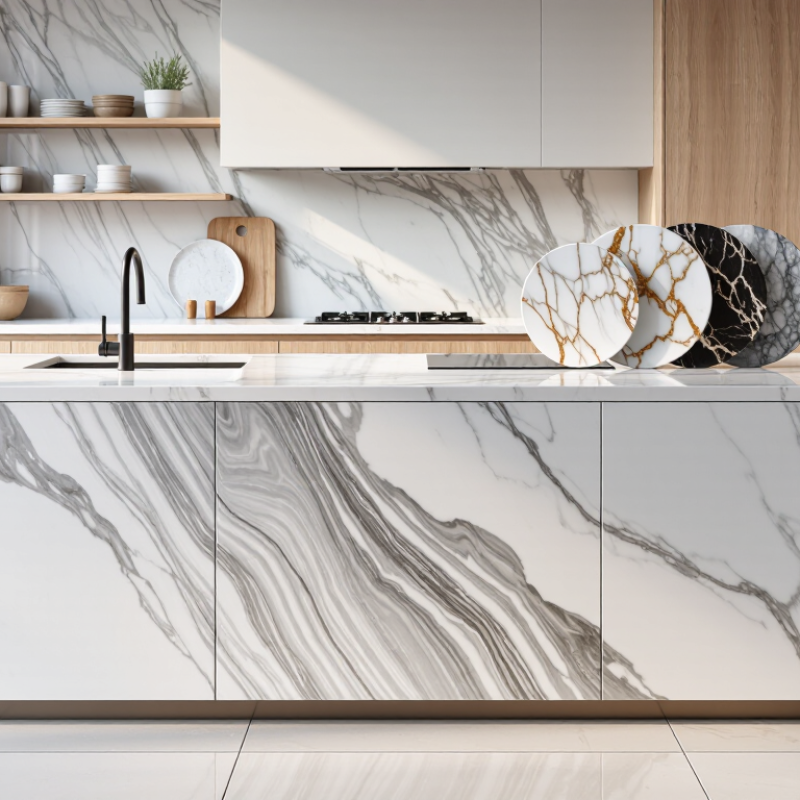
China Top 10 Marble Types Is Marble Good for Kitchen Use?

What Marble Is and How It Is Formed

Marble begins as limestone or dolostone, rocks made mainly from calcite or dolomite. Over time, heat and pressure deep underground change their mineral structure without fully melting the rock. This process is called metamorphism. The original grains recrystallize into interlocking crystals, giving marble its familiar texture. The change can take millions of years. It is not a quick recipe.

Veins and colors come from minerals and other materials present during formation. Clay, iron oxides, or graphite may create gray, gold, green, or dark markings. Pressure can stretch these traces into flowing lines, though each slab varies. A dramatic pattern does not necessarily reveal how durable a particular stone will be.

Tips: Look closely at both the polished surface and a cut edge. Marble is usually calcite-rich, but appearance alone cannot confirm its composition; ask a qualified stone professional when identification matters. For kitchen planning, remember that marble can scratch and react with acids such as lemon juice. Those marks are part of its behavior, not proof of poor quality. A sample at home may help you judge its veining under your own lighting, though it cannot show every detail of a full slab.

China Top 10 Marble Types: Is Marble Good for Kitchen Use?

Marble forms when limestone or dolostone is changed by heat and pressure, causing its minerals to recrystallize. The chart compares typical Mohs hardness values for common countertop stones.

Marble is relatively soft, so it can scratch more easily than granite or quartzite. Its calcite content also reacts with acids such as lemon juice and vinegar, which can dull the finish. Sealing helps resist staining but does not prevent etching or scratching.

Ten Notable Marble Types Found in China

China’s marble trade includes striking regional stones, though names can vary between quarries and suppliers. Dali White is known for pale ground and fine gray veining; Dali Gray has a cooler, clouded pattern. Guangxi White often appears bright and relatively uniform, while Guangxi Gray offers darker movement. Yunnan Beige brings warm cream tones. Sichuan White is typically light with soft veins, and Sichuan Green adds muted green bands. Hubei White is prized for a quiet, clean appearance; Fujian White can show stronger gray streaks. Tianshan Snow is sold in pale, snow-like patterns, while China Black provides a dramatic dark option. Confirm the quarry and stone composition: trade names alone do not guarantee consistent properties.

The U.S. Geological Survey’s 2024 Mineral Commodity Summaries estimates U.S. dimension-stone production at roughly 1.7 million metric tons in 2023. That figure covers multiple stone types, not Chinese marble alone, but it shows the scale of dimension-stone extraction.

For kitchen counters, appearance is only part of the choice. Marble can etch when acidic foods touch its calcite surface. Lemon juice leaves a dull mark. The Natural Stone Institute’s care guidance recommends prompt cleanup and suitable stone-care products; sealing may reduce staining, but it does not prevent acid etching. Ask for the exact stone’s test results and inspect a sample under kitchen lighting. I would not choose by name alone.

How Chinese Marble Types Differ in Color and Properties

Chinese marble varies widely in color and structure. Guangxi White often has an ivory background with soft gray veins, while some Yunnan stones show warmer beige or green tones. Sichuan White may appear cooler and more crystalline, though individual slabs can differ. Color is only part of the choice. Grain, veins, and mineral inclusions change how stone looks under kitchen lighting.

Some slabs are fairly uniform; others have bold movement or visible fissures. A honed finish softens reflections and may make small etches less noticeable. Polished marble looks brighter, but scratches and acidic marks can stand out. Marble contains calcium carbonate, so lemon juice, vinegar, and wine may dull its surface. Sealer helps resist stains, not acid damage.

Marble can work in a kitchen with realistic care. Wipe spills promptly, use cutting boards, and inspect a sample under your own lighting. Ask the fabricator about repairs and maintenance for that specific slab. A pale countertop may feel timeless, but it will not stay untouched. That is part of its character, and sometimes a frustration.

Is Marble a Practical Choice for Kitchen Use?

Marble can work in a kitchen, but it asks for more care than many homeowners expect. Its cool surface is pleasant for rolling pastry, and natural veining gives each slab a distinct look. The trade-off is visible in daily use. Lemon juice, vinegar, and wine can dull the finish, while knives and grit may leave marks. The Natural Stone Institute’s care guidance warns that acid-sensitive stones such as marble can etch; sealing helps resist stains, but it does not prevent etching.

Material data helps explain why. The U.S. Geological Survey’s mineral information places calcite at Mohs hardness 3, and many marbles are calcite-rich. That is relatively soft compared with common countertop minerals, so a dropped pan or dragged ceramic bowl can matter. Houzz’s 2024 U.S. Kitchen Trends Study reports that 42% of renovating homeowners chose engineered quartz countertops. That figure reflects preference, not proof that quartz is right for every kitchen. A busy household may find marble’s maintenance frustrating. Still, a honed finish can make small scratches less conspicuous, and some owners appreciate the patina. Be honest about the upkeep. A cutting board, prompt spill cleanup, and periodic professional advice help, though they will not keep marble looking untouched.

How to Choose and Maintain Marble Kitchen Surfaces

Marble can bring soft veining and a cool, natural feel to a kitchen, but its beauty comes with upkeep. Before choosing a slab, inspect a large sample in your own lighting. Veining and color can vary across the stone. Ask a qualified fabricator about the marble’s porosity, finish, and sealing schedule. Honesty matters here: no sealer makes marble stain-proof, and acidic foods can dull its surface.

Tips: Wipe spills quickly, especially lemon juice, vinegar, tomato sauce, and wine. Use a soft cloth with mild, stone-safe cleaner; avoid abrasive pads and acidic sprays. Place cutting boards under food prep and coasters beneath drinks. Test cleaning products on a hidden area first.

For daily use, a honed finish can make small scratches and etching less conspicuous than a polished one, though it may absorb spills more readily. Keep a towel near the sink. It sounds simple, but missed coffee rings happen. Have the surface sealed when recommended by your stone professional, and treat maintenance advice as specific to your slab. If you prefer a carefree counter, marble may frustrate you; if you accept patina and prompt care, it can work well.

China’s 10 Representative Marble Types: Is Marble Good for Kitchen Use?

Compare representative marble varieties sold in China, then use the selection and care guidance to assess whether marble suits your kitchen.

Marble Type Typical Chinese Origin Typical Appearance Kitchen Suitability Selection and Maintenance Tips
Dali Marble Dali, Yunnan Known for varied veining and patterned stones; color and pattern depend on the specific variety. Suitable for counters when the owner accepts natural variation and routine care. View the actual slab before purchase. Wipe spills promptly and use a cutting board and trivets.
Han White Marble Hebei Generally white to off-white, with possible gray markings or veins. Can create a bright, classic countertop, but light colors may show stains more readily. Check for visible fissures and discoloration. Ask the fabricator about sealing and suitable cleaners.
Guangxi White Marble Guangxi Typically white or pale in tone; veining and background color vary by quarry and lot. Usable for kitchen surfaces with prompt spill cleanup and protective habits. Inspect the specific slab for color consistency. Avoid lemon juice, vinegar, and acidic cleaners.
Sichuan White Marble Sichuan Usually marketed in light shades, with natural variation in grain and markings. A possible choice for a light-colored kitchen, though marble is more maintenance-sensitive than many alternatives. Confirm the finish and slab condition in person. Use mild, pH-neutral stone cleaner.
Shandong White Marble Shandong Commercially described as white or light-colored marble; appearance varies among deposits. Suitable if the desired look is more important than resistance to acids and etching. Request a sample from the same lot. Do not assume sealing prevents acid etching.
Yunfu White Marble Yunfu, Guangdong Generally presented in white or pale tones, with natural differences in veining. Can be used for counters, islands, or backsplashes with regular care. Ask whether the slab has been filled or repaired, and follow the supplier’s sealing instructions.
Fujian White Marble Fujian Typically sold in light shades; exact color and pattern depend on the source and selection. Appropriate for kitchens where the owner is comfortable with patina and occasional marks. Check samples under the kitchen’s lighting. Dry standing water and clean spills without delay.
Guizhou Grey Marble Guizhou Gray backgrounds with possible cloudy or linear natural patterns. A practical visual option for kitchens, but it remains vulnerable to acids and surface etching. Inspect the full slab for pattern movement. Use coasters for acidic drinks and avoid abrasive pads.
Yunnan Green Marble Yunnan Green-toned stones with patterns that can range from subtle to strongly veined. Often chosen as a statement surface; suitability depends on the specific stone and care expectations. Review the whole slab for color variation. Confirm the stone’s composition and care requirements with the fabricator.
China Black Marble Multiple regional sources; trade name varies Usually marketed as dark gray to black, sometimes with lighter veins or markings. Can provide a dramatic countertop, but the trade name alone does not establish its exact composition or performance. Verify that the material is marble and ask for care guidance for that specific slab. Test samples for visible water marks and finish changes.

Kitchen use and care: Marble can be used in kitchens, but calcite-rich marble is sensitive to acids, which can dull or etch the surface. Sealing may reduce absorption but does not make marble acid-proof or stain-proof. Use cutting boards, trivets, and pH-neutral cleaners; blot spills promptly. These are representative trade categories, not a fixed national ranking or standardized grading system. Names, colors, and properties can vary by quarry, lot, finish, and processing, so inspect the actual slab and confirm its composition before buying.

FAQS

What are some notable marble types found in China?

Dali White has a pale background with fine gray veins. Yunnan Beige brings warmer cream tones, while Sichuan Green has muted green bands. Names and appearances can vary.

How do Chinese marble types differ in appearance?

Some slabs look calm and nearly uniform. Others show bold veins, cloudy patterns, or visible inclusions. Even slabs sold under one name may differ.

Is marble practical for a kitchen countertop?

It can be, but it needs attentive care. Its cool surface suits pastry work, though daily marks may frustrate busy households. Not quite carefree.

Can sealing prevent lemon juice from etching marble?

No. Marble contains calcite, which acids can dull. Sealer may reduce staining, but it does not prevent acid etching.

Which marble finish makes marks less noticeable?

A honed finish softens reflections and may disguise small etches. Polished marble looks brighter, but scratches and dull spots can stand out.

How should I compare marble samples before choosing?

View the sample under your kitchen lights. Check its veins, grain, and inclusions, then ask about that slab’s composition and test results.

How can I reduce everyday damage to marble?

Use cutting boards and wipe spills promptly. Keep grit away from the surface, and ask a fabricator about repairs and care for your slab.

Will marble keep its original appearance over time?

Probably not completely. Small marks and patina may develop, even with careful use. Some owners like that; others find it disappointing.

Conclusion

Marble is a natural stone formed over time when heat and pressure transform limestone, creating distinctive patterns and a range of colors. China is home to many notable marble varieties, each with its own appearance, veining, texture, and physical characteristics. Some stones have calm, subtle patterns, while others feature bold contrasts that make them eye-catching choices for floors, walls, and countertops. Understanding these differences can help readers select a marble type that suits their design preferences and intended use.

So, is marble good for kitchen use? It can be, especially for homeowners who value natural beauty and are willing to care for the surface. Marble is porous and can be scratched, stained, or affected by acidic spills, so it generally needs sealing and prompt, gentle cleaning. Choosing a suitable finish and color, using cutting boards and trivets, and following a regular maintenance routine can help preserve its appearance. The best kitchen marble is one whose look, durability, and upkeep requirements fit the household’s needs.

Ethan

Ethan

Ethan is a seasoned marketing professional with a deep expertise in our company's innovative product line. With a passion for sharing knowledge and insights, he takes the lead in regularly updating our corporate blog, where he explores industry trends, product features, and effective marketing......