When it comes to choosing the ideal surface for kitchen countertops, many homeowners wonder, "which stone is best for kitchen countertops?" Renowned interior designer Sarah Thompson states, “The right stone can transform your kitchen and elevate its overall design.”
Selecting the perfect stone involves not only aesthetics but also functionality. Granite, marble, and quartz are popular choices, each with unique characteristics. For instance, granite is durable and resistant to heat, making it suitable for busy kitchens. Conversely, marble offers a classic look but requires more maintenance.
Homeowners often overlook their lifestyle and cooking habits when making a decision. For example, heavy cooks might prioritize durability, while those who entertain may value beauty over practicality. Reflecting on these factors is crucial. Ultimately, understanding “which stone is best for kitchen countertops” requires both personal preference and informed choices.
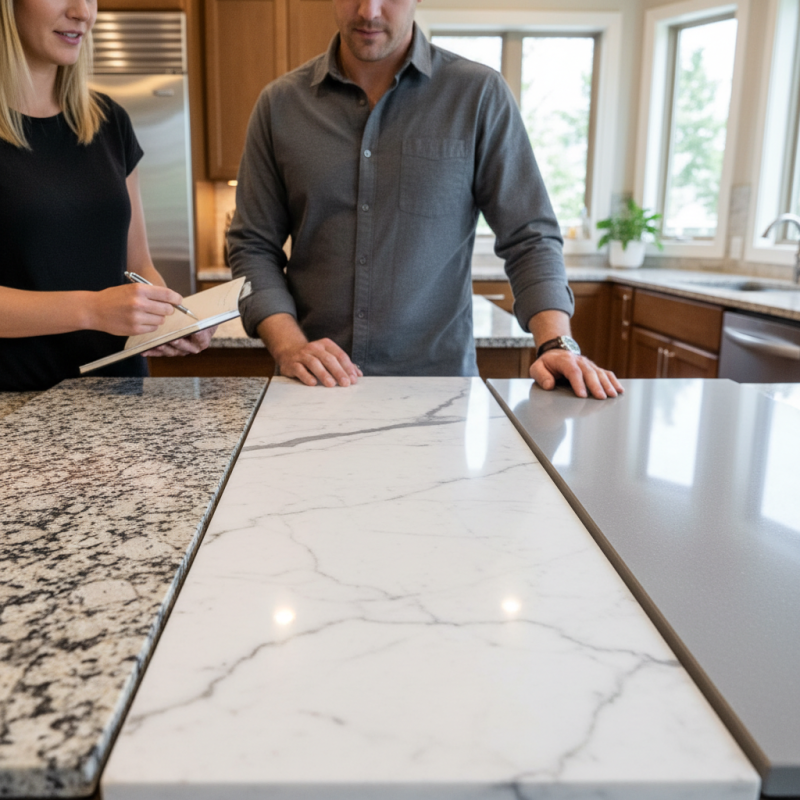
When choosing stone for kitchen countertops, several options stand out. Granite is incredibly popular due to its durability and wide variety of colors. It can withstand heat and scratches, making it a reliable choice for busy kitchens. However, it requires sealing to prevent stains.
Marble offers a classic, elegant look. Its veining creates unique patterns that enhance any kitchen design. Yet, marble is more porous and can scratch or stain easily. Proper care is essential for maintaining its beauty.
Quartzite is another excellent choice. It mimics the look of marble but boasts greater durability. Its resistance to heat and scratches makes it perfect for culinary tasks. However, it can be more expensive than other options, which might require careful budgeting.
Tips: Regularly clean all stone surfaces with mild soap and water. Avoid acidic cleaners to protect your stone’s finish. Consider sealing your countertops annually to prolong their lifespan. Each stone type has its pros and cons, so weigh your options carefully.
Granite is often celebrated as a top choice for kitchen countertops. It combines durability and natural beauty, making it a desirable option. One of the main advantages of granite is its resistance to heat. You can place hot pots directly on the surface without worry. This feature is ideal for those who cook frequently.
Another benefit is its scratch resistance. Granite counters can withstand the daily wear and tear of kitchen activities. However, they are not entirely scratch-proof. It's wise to use cutting boards to maintain the surface's pristine look. Additionally, granite is available in a wide range of colors and patterns. This variety allows homeowners to find the perfect match for their kitchen design.
Granite does require regular sealing to prevent stains. Neglecting this maintenance can lead to potential issues over time. While the initial cost can be high, many see it as a long-term investment. The beauty and functionality of granite can enhance the value of your home. Choosing granite for your kitchen is not just a trend; it’s a decision that reflects both style and practicality.
Marble is a timeless choice for kitchen surfaces. Its elegance adds instant sophistication. The vast range of colors and patterns available can fit any kitchen design, from modern to classic. Marble offers unique veining, ensuring no two slabs are alike. This individuality can transform a kitchen into a work of art.
One of the reasons to consider marble is its cool surface. This feature makes it ideal for baking and pastry work. It stays cool, helping to manage dough temperature. However, marble is porous. It can stain easily if spills are not cleaned promptly. This characteristic requires careful consideration for homeowners with younger children or frequent gatherings.
Care and maintenance are crucial. Regular sealing can help protect marble from scratches and stains. Employing coasters and cutting boards can reduce wear. This stone might require more attention compared to others. Balancing aesthetic appeal with practical use remains a personal choice. Ultimately, marble can be a stunning yet challenging option for kitchen countertops.
When choosing materials for kitchen countertops, quartz and quartzite are popular options. Both stones offer durability and an aesthetic appeal that enhance any kitchen design. However, they have various characteristics that can influence your decision.
Quartz is engineered stone. It contains about 90% crushed quartz mixed with resins. This structure makes it non-porous and easy to maintain. It doesn't require sealing. A study by the National Kitchen and Bath Association highlighted that 70% of homeowners prefer quartz for its low maintenance. However, its surfaces can be vulnerable to high heat.
On the other hand, quartzite is a natural stone. It originates from sandstone and undergoes a metamorphic process. This material is incredibly durable and heat-resistant. A report from the Natural Stone Institute notes that quartzite can withstand temperatures as high as 1000°F. Although beautiful, it needs periodic sealing to maintain its appearance.
Tip: When deciding, consider your cooking habits. If you often use hot pans, quartzite may be the better choice.
Consider the color variations, too. Quartz offers more uniformity, while quartzite showcases unique patterns. Each stone tells a story through its natural hues.
Tip: Visit a stone yard for samples. Seeing the material physically can guide you in making a decision.
When choosing a stone for kitchen countertops, consider several important factors. The durability of the stone is crucial. You want a surface that can withstand daily use without scratches or chips. Some stones, like granite, are known for their strength, but they can be porous. This means they may need sealing to prevent stains.
Also, consider the maintenance level. Some stones require more upkeep than others. For instance, marble is beautiful but can be prone to etching from acidic substances. Think about how much time you can commit to cleaning and maintaining your countertops. The appearance is another key factor. The color and pattern can set the tone for your kitchen. A neutral stone may be versatile, but a bold pattern can offer a statement.
Lastly, budget is a significant consideration. Premium stones often come with a higher price tag. You might find that a well-chosen, less expensive stone meets your needs just as well. Reflect on your cooking habits and lifestyle. What works for someone else may not suit your kitchen's needs. Make a decision that truly fits your life.
| Stone Type | Durability | Maintenance | Cost per Sq. Ft. | Style Variety | Heat Resistance |
|---|---|---|---|---|---|
| Granite | Very High | Low | $50 - $100 | Extensive | Excellent |
| Marble | Moderate | High | $60 - $120 | Moderate | Good |
| Quartz | High | Very Low | $70 - $150 | Varied | Good |
| Soapstone | Medium | Low | $60 - $150 | Limited | Very Good |
| Limestone | Low | High | $30 - $70 | Few Options | Fair |
: Granite is durable and heat-resistant, allowing hot pots to be placed directly on its surface.
Granite is scratch-resistant, but not completely. Using cutting boards is advisable to maintain its appearance.
Yes, granite needs regular sealing to prevent stains. Neglecting this can lead to problems over time.
Granite can be expensive initially, but many view it as a long-term investment that adds home value.
Consider durability, maintenance, appearance, and budget. Each factor impacts the long-term satisfaction with your choice.
Yes, the variety of colors and patterns in granite allows for matching or contrasting with your kitchen design.
Being porous means granite can stain if not sealed regularly. This could create future issues if neglected.
Your cooking habits and cleaning commitment should influence your decision. What works for others may not suit you.
No, there are various stones available. Some have lower maintenance or different aesthetics that may better fit your needs.
Failure to maintain it can lead to stains and reduced longevity. Regular care is essential for keeping it looking good.
When considering which stone is best for kitchen countertops, there are several options to evaluate. Granite is a popular choice due to its durability and resistance to heat and scratches, making it an excellent long-term investment. Marble, while elegant and timeless, requires more maintenance due to its susceptibility to staining and etching. For those looking for modern alternatives, quartz and quartzite present unique features; quartz is engineered for consistency and offers a variety of colors, whereas quartzite is a natural stone that combines the beauty of marble with the toughness of granite.
In determining the right stone for your kitchen surfaces, it's crucial to consider not only aesthetics and style but also practicality. Factors such as maintenance requirements, durability, and how the stone fits into your kitchen design can significantly influence your choice, ultimately leading to the best decision for your space.

Zenlith Stone