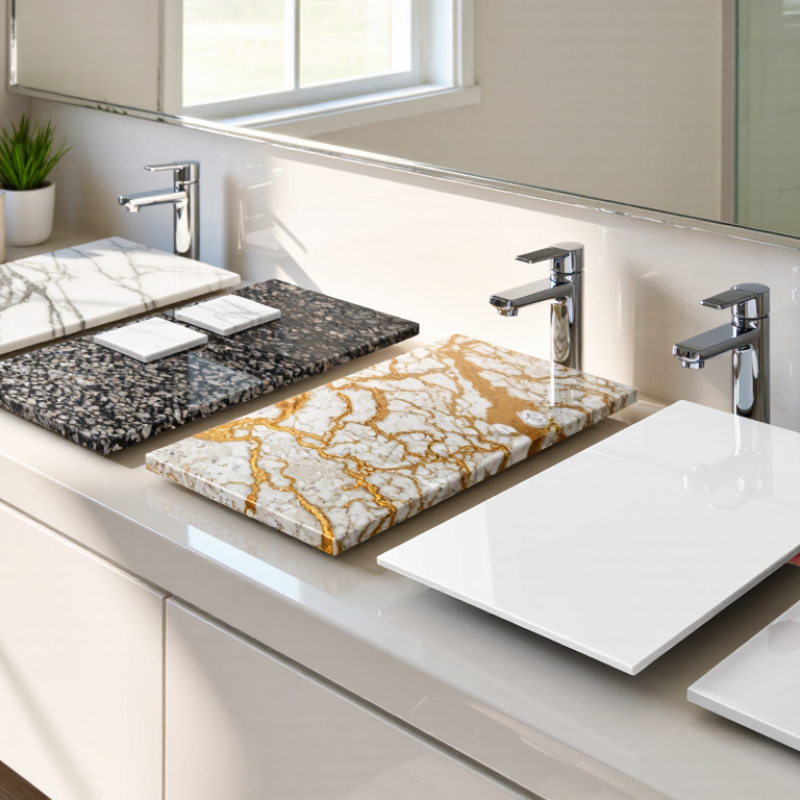
2026 How to Choose the Best Stone for Bathroom Vanity

Time:2026-10-27 Author:Liam
0%

Choosing a bathroom vanity stone begins with a practical question: what stone is best for bathroom vanity projects in real homes? The answer depends on moisture, cleaning habits, lighting, budget, and daily use. A family bathroom faces different demands than a lightly used guest powder room.

Fred Hueston, Ph.D., a stone and tile consultant and author of Stone & Tile Care, says, “Natural stone is a product of nature, and no two pieces are exactly alike.” That observation matters when comparing marble, granite, quartzite, engineered quartz, and porcelain. A marble slab may offer soft veining and timeless character, but acidic cleaners can etch its surface. Granite usually brings stronger stain resistance, while quartzite can combine dramatic movement with impressive durability. Engineered quartz offers consistent patterns and simple maintenance, though excessive heat and harsh chemicals still deserve caution. Porcelain can provide a clean appearance and strong moisture resistance, but edge fabrication requires an experienced installer.

This guide examines each option through an installer’s and homeowner’s lens. You will see how a vanity top feels beneath wet hands, how dark stone reveals water spots, and how a polished edge catches morning light. Small details matter.

There is no flawless material.

A low-maintenance surface may look less natural. A beautiful slab may require sealing and careful cleaning. Even expert recommendations can miss personal priorities. Before choosing, request physical samples, inspect the finished edge, and ask the fabricator about seams, support, sealing, and warranty terms. The best decision is not merely attractive. It should remain practical after years of splashes, cosmetics, and rushed cleaning.

2026 How to Choose the Best Stone for Bathroom Vanity

Define Your Bathroom Vanity Stone Requirements

Before choosing a bathroom vanity stone, define how the room will be used.

A family bathroom needs strong resistance to water, stains, cosmetics, and repeated cleaning. A guest bathroom may prioritize appearance over extreme durability. Measure the vanity length, sink cutout, backsplash, edge profile, and wall tolerances. A small error can leave an expensive stone unusable.

According to the 2024 U.S. Houzz Bathroom Trends Study, homeowners continue investing in updated showers, storage, and easier-to-maintain surfaces. This supports a practical requirement: beauty should not create extra maintenance.

Compare stone performance, not only color. Ask fabricators for water absorption, flexural strength, and chemical-resistance information. ASTM C97 measures absorption and bulk specific gravity for natural stone. ASTM C880 evaluates flexural strength. These tests help separate suitable materials from attractive but vulnerable options.

Dark polished surfaces can reveal toothpaste marks, water spots, and fine scratches under bright lighting. Light stones may hide dust but show hair dye or foundation. I have found that viewing samples beside the actual faucet and wall tile reveals problems early. Online images rarely show this honestly.

Tips:

Place a sample near the sink for several days. Test water, soap, and a cosmetic product, with permission from the supplier. Check the finish under daylight and bathroom lighting. Confirm sealing needs and maintenance instructions in writing. Do not assume “natural” means low maintenance. That assumption is often wrong.

Compare Natural and Engineered Stone Options

Choosing the best bathroom vanity stone in 2026 starts with a practical comparison. Natural marble and granite offer unique veining, while engineered quartz provides more consistent color. The 2024 NKBA Design Trends Report lists quartz among the leading countertop choices in residential design. That preference reflects predictable fabrication, not simply fashion.

Natural stone creates a warmer, more individual surface. No two marble slabs match perfectly. However, marble can absorb acidic spills and develop etching near a soap dispenser. Granite generally tolerates moisture and heat better, but its pores still require proper sealing. ASTM C97 testing measures stone absorption and density, so ask suppliers for current test results. A polished sample is not enough.

Engineered quartz usually needs less routine sealing and offers stable patterns around undermount sinks. Its resin content can be vulnerable to excessive heat, harsh chemicals, and prolonged sunlight. The National Sanitation Foundation’s countertop guidance also emphasizes cleanable, nonabsorbent surfaces for hygienic applications. Yet “low maintenance” does not mean maintenance-free. Fine scratches and dull patches still appear when abrasive powders are used. I would inspect the slab beside the vanity lighting, not only under showroom lamps. Small imperfections often matter more than a dramatic sample.

Evaluate Durability, Moisture Resistance, and Maintenance

2026 How to Choose the Best Stone for Bathroom Vanity

A bathroom vanity faces water, cosmetics, soap, and daily temperature changes. Durability matters more than appearance alone. Granite usually handles impacts and heat well, while engineered quartz offers consistent density and simple cleaning. Marble can look elegant, but its softer surface may scratch or etch from acidic products. The best choice depends on your household habits.

Moisture resistance starts with low absorption. Ask for the stone’s absorption data, not only a showroom sample. A pale patch beneath a wet cup can reveal porosity. Natural stone often needs professional sealing, especially around the faucet holes and backsplash joint. Sealing reduces absorption, but it does not make the surface waterproof. Water can still enter through poorly finished edges or cracked caulk.

Maintenance should fit real life. Wipe toothpaste, hair dye, and cosmetics quickly with a soft cloth and pH-neutral cleaner. Avoid abrasive powders, harsh acids, and rough scouring pads. Check the underside of the basin area during installation. Weak support or a careless cutout can cause failure later. I once trusted a beautiful sample without checking its edge finish, and that small mistake became a constant cleaning problem. No surface is maintenance-free. Inspect the seal twice yearly, although busy bathrooms may need more frequent checks. A practical stone is one that remains attractive after ordinary, imperfect use.

2026 How to Choose the Best Stone for Bathroom Vanity

Compare typical performance across durability, moisture resistance, and maintenance ease. Scores range from 1 to 5, with 5 representing stronger performance or easier care in a residential bathroom environment.

Quartz and soapstone generally require less routine sealing, while granite, quartzite, and marble may need periodic sealing depending on porosity and the manufacturer’s care guidance. Actual performance varies by slab, finish, fabrication, and installation quality.

Match Stone Color, Finish, and Style to Your Bathroom

Choosing the best stone for a bathroom vanity starts with the room’s visual temperature. Warm beige stone softens white walls and oak cabinetry. Cool gray stone sharpens a bathroom with black fixtures. In a small room, pale stone can reflect more light, while deep colors create a quieter, hotel-like mood. The 2024 U.S. Bathroom Trends Study reported a median major-bathroom renovation cost of about $35,000, so color mistakes can become expensive ones.

Finish changes the experience

Finish changes the experience more than many homeowners expect. Honed stone feels soft and modern, but it can show fingerprints, water marks, and darker patches. Polished stone reflects light and reveals veining clearly. Textured finishes hide small splashes better, although cleaning may take longer. Industry design data also identifies quartz as a leading vanity-countertop choice, with roughly 44% of surveyed homeowners selecting it in recent bathroom renovations (2024 U.S. Bathroom Trends Study). Natural stone offers more variation, but that variation needs approval before fabrication.

Match the stone to daily habits, not only photographs. A busy family bathroom may benefit from a low-maintenance surface and subtle movement. A guest bathroom can accept stronger veining and a more delicate finish. Ask for a full-size sample near the mirror, tile, and daylight. Small samples mislead. I once saw warm stone look pink beside cool lighting, despite appearing neutral in the showroom. That detail deserves a second look.

Set a Budget and Select the Best Stone for Your Vanity

2026 How to Choose the Best Stone for Bathroom Vanity

Set a Budget and Select the Best Stone for Your Vanity

Set your complete budget before comparing stone colors. Include the slab, measuring, cutting, edge finishing, sink openings, delivery, and installation. A low material price can rise quickly after fabrication charges appear. Request a written quote with every service listed.

Quartz often suits busy bathrooms because it resists stains and needs little daily care. Granite offers strong performance, but its surface may need periodic sealing. Marble creates gentle veining and a refined appearance, yet acidic products can etch it. Porcelain can be lightweight and highly resistant, although cutting requires experienced workmanship. Ask a qualified fabricator about thickness, support, seams, and local installation requirements.

Bring home a sample. View it beside your tiles and bathroom lighting. Small chips and grout lines can change the appearance. A practical lesson is easy to miss: the most attractive stone may not fit your maintenance habits. A glossy surface also shows water spots more clearly. Think about that.

Leave part of the budget for repairs or unexpected adjustments. I would not spend every dollar on the slab. Check the sink size, cabinet strength, and wall measurements before ordering. A careful fabricator should confirm these details in writing. Your final choice should balance appearance, durability, cleaning effort, and realistic household use.

2026 How to Choose the Best Stone for Bathroom Vanity - Set a Budget and Select the Best Stone for Your Vanity

Compare common vanity countertop materials by estimated installed cost, performance, maintenance, and design suitability. Prices are typical U.S. residential ranges for 2026 and may vary by region, thickness, edge profile, cutouts, slab availability, and installation complexity.

Stone Type Typical Installed Cost
Per Square Foot
Hardness &
Durability
Water &
Stain Resistance
Maintenance Requirement Heat & Chemical Considerations Best Design Use Budget Level Overall Suitability
Engineered Quartz $60–$120 Very durable; nonporous surface with consistent composition. Excellent resistance to everyday bathroom moisture and staining. Usually needs only routine cleaning with mild soap and water; sealing is not normally required. Can discolor or suffer surface damage from high heat, harsh solvents, and strong alkaline cleaners. Modern, minimalist, and uniform designs with many color options. Mid to high ★★★★★
Granite $50–$100 Very hard and scratch-resistant; suitable for frequent daily use. Low to moderate porosity depending on the specific stone; sealing improves stain resistance. Clean with a pH-neutral product and reseal periodically according to the fabricator’s recommendation. Good heat resistance, but thermal shock and harsh chemicals can damage the sealer or finish. Traditional, transitional, and natural-stone bathrooms. Mid ★★★★★
Marble $70–$150 Moderately hard but more vulnerable to scratching and surface wear than granite or quartz. Porous; can absorb cosmetics, hair dye, oils, and colored liquids without proper sealing. Requires careful cleaning, periodic sealing, and prompt removal of spills. Calcium-based stone can etch when exposed to acidic products such as vinegar, lemon, and some bathroom cleaners. Luxury, classic, spa-inspired, and veined statement vanities. High ★★★★☆
Quartzite $80–$180 Extremely hard and highly scratch-resistant when correctly identified and fabricated. Generally low to moderate porosity; sealing is commonly recommended. Use a mild cleaner and maintain the protective sealer as needed. Good heat resistance, but acidic cleaners and sudden temperature changes may affect the surface or sealer. High-end bathrooms seeking natural veining with strong durability. High ★★★★★
Soapstone $70–$120 Dense and nonporous, but softer than granite and can develop scratches or dents. Excellent moisture resistance because it does not readily absorb water. Low maintenance; optional mineral oil can deepen color and create a more even appearance. Excellent heat and chemical resistance compared with many natural stones. Matte, rustic, farmhouse, and historically inspired interiors. Mid to high ★★★★☆
Porcelain or Sintered Stone $60–$140 Hard, lightweight in slab form, and highly resistant to scratching and abrasion. Very low water absorption and strong resistance to most stains. Simple routine cleaning; sealing is generally unnecessary. Strong heat and ultraviolet resistance; edges can chip if handled or fabricated improperly. Contemporary spaces, thin-profile tops, and large-format designs. Mid to high ★★★★★
Limestone $55–$100 Moderately soft and more prone to scratching, abrasion, and surface wear. Porous and requires effective sealing for bathroom use. Needs regular sealing and immediate cleanup of cosmetics and colored liquids. Highly sensitive to acids, including vinegar, citrus-based products, and acidic cleaners. Soft, warm, Mediterranean, and natural-texture designs. Mid ★★★☆☆
Travertine $50–$100 Moderately soft; filled holes and textured surfaces can wear over time. Porous and should be sealed, especially around sinks and faucets. Requires gentle cleaning, periodic resealing, and occasional repair of pits or filler. Acid-sensitive; acidic cleaners can dull or etch the surface. Old-world, Mediterranean, rustic, and textured bathroom schemes. Mid ★★★☆☆

Budget tip: A small single-sink vanity usually uses approximately 8–12 square feet of countertop material, but the final price can increase because of sink, faucet, backsplash, edge, delivery, template, and cutout charges.

FAQS

What are the main stone options for a bathroom vanity?

Natural marble, granite, and engineered quartz are common choices. Each handles moisture, heat, stains, and daily wear differently.

Why choose natural marble for a bathroom vanity?

Marble offers unique veining and a warmer, more individual appearance. No two slabs match perfectly. However, acidic spills can cause etching.

Is granite more durable than marble?

Granite generally handles moisture and heat better than marble. Its pores still need proper sealing. Ask for current absorption and density test results.

Does engineered quartz require no maintenance?

No. Quartz usually needs less routine sealing, but abrasive powders can create fine scratches and dull patches. Low maintenance is not maintenance-free.

Can heat or sunlight damage engineered quartz?

Excessive heat, harsh chemicals, and prolonged sunlight may affect its resin content. Keep hot tools away from the surface.

Which stone color works best in a small bathroom?

Pale stone can reflect more light and make a small room feel brighter. Deep colors create a quieter mood but may feel heavier.

How does the finish change a vanity’s appearance?

Polished stone reflects light and highlights veining. Honed stone feels softer but shows fingerprints and water marks. Textured finishes hide splashes better.

How should I compare a stone sample before fabrication?

View a full-size sample beside the mirror, tile, cabinetry, and daylight. Showroom lighting can hide color shifts and small imperfections.

Which stone suits a busy family bathroom?

A surface with stable patterns and simpler care may suit heavy daily use. Choose subtle movement if water marks and clutter already attract attention.

What mistake should homeowners avoid when choosing vanity stone?

Do not rely only on photographs or small samples. Warm stone may look pink under cool lighting. Inspect it carefully.

Conclusion

Choosing the right stone for a bathroom vanity begins with understanding your practical needs, including the vanity’s size, daily use, moisture exposure, and desired maintenance level. When asking “what stone is best for bathroom vanity,” compare natural options such as granite, marble, and soapstone with engineered choices such as quartz. Natural stone offers unique patterns and character, while engineered stone often provides consistent appearance and convenient upkeep. Consider durability, resistance to water and stains, heat tolerance, and how easily the surface can be cleaned and sealed.

Your final selection should also complement the bathroom’s color palette, lighting, cabinetry, and overall style. Polished finishes can create a bright, elegant look, while honed or textured finishes offer a softer, more understated appearance. Finally, establish a realistic budget that includes the stone, fabrication, installation, edge details, sealing, and long-term care. The best choice balances beauty, performance, maintenance, and cost for your specific bathroom.

Liam

Liam

Liam is a dedicated marketing professional with a profound expertise in the industry, where he excels at highlighting the unique advantages of our core products. With a keen understanding of market trends and consumer needs, Liam frequently updates our company’s professional blog, providing......